USL Super League Preview, 2026
Everything you need to know about the new Super League season


This weekend, the USL Super League returns for a truncated 14-match sprint ahead of next year’s calendar change. The wonky format provides a new urgency to the Super League season, adding stakes to every match that’ll take place between now and the end of November.
Ahead of kickoff, what should we expect from the Super League’s eight teams? That’s what we’re here to find out. I’m digging into the new additions, major losses, and tactical themes that will define the year to come for each club. Along the way, I’m also mocking up a depth chart and providing an instructional tactical clip to set the stage for the new season.
For ongoing attendance data throughout the season, you can check out Backheeled's tracker. For player stats and roster updates, I'll have a tracking hub on this site. Without further ado, let’s dig in to the 2026 Super League preview.
Brooklyn FC
Last Year: 7th, 26 points (-13 GD, -4 xGD)
Roster Breakdown
(4-2-3-1? I guess?)
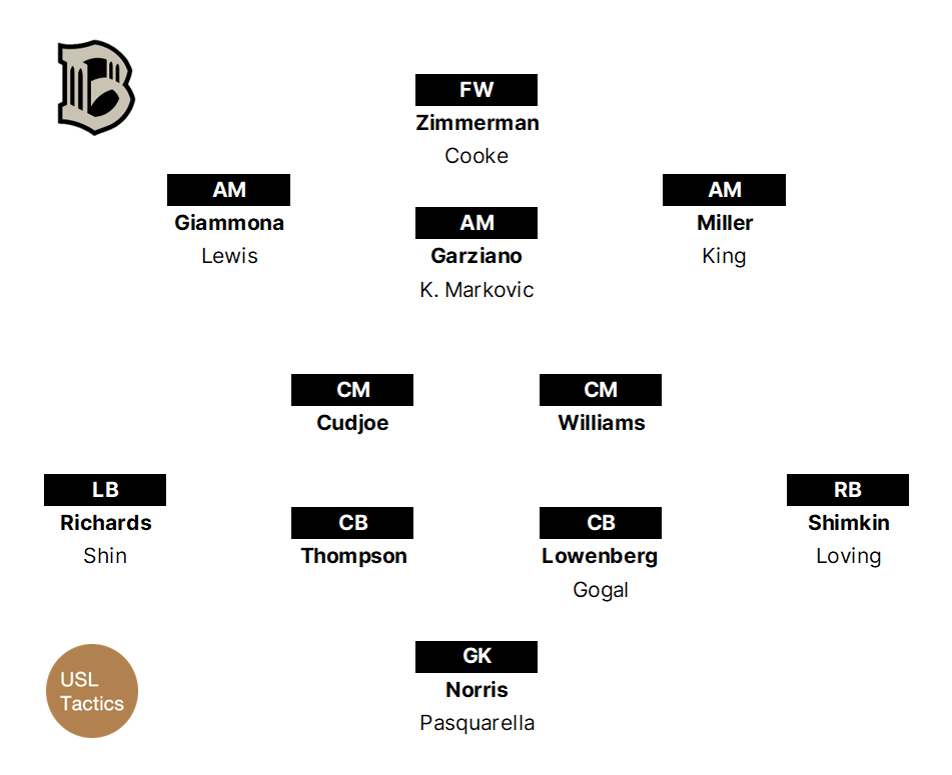
Added
- Carlee Giammona, AM: A title winner in 2024-2025, Giammona spent two seasons with Tampa Bay and notched 15 goal contributions during her time with the Sun. Capable from halfspace to halfspace, the 25-year-old immediately becomes Brooklyn’s most proven offensive weapon.
- Ashlyn Miller, AM: Part of a Brisbane-tinged re-tool, Miller was a standout at the University of Texas before spending her rookie season in Australia. There, she mostly played off the right wing for manager Alex Smith and notched eight total goal contributions.
- Jackie Richards, AM/WB: Richards, 25, put up eight goal contributions in less than 800 minutes during her 2024-2025 season with Hearts in Scotland, excelling as an either-sided wingback. Though her follow-up campaign was quieter, Richards proved during her time with Villanova and Campbell in the college ranks that she’s got real upside as an attacking threat.
- Jillian Shimkin, WB: A teammate of Giammona’s in Tampa Bay and Miller’s at Texas, Shimkin created 1.7 chances and made 2.4 progressive carries per game with the Sun last season in limited minutes. Shimkin’s best trait is her spark with the ball, a feature that’ll help Brooklyn improve their threat from the wide areas.
- Sophia Lowenberg, CB: Lowenberg had a cup of coffee in the NWSL after a successful run at Boston College and should be a key contributor in Brooklyn’s revamped defensive group. The defender won 65% of her defensive duels in college and shone as a progressive passer from the right side of the back line.
Lost
- Sam Kroeger, CM/LB: Kroeger was among the Super League’s best holding mids in Brooklyn’s debut season, and it speaks volume to her quality that she seamlessly switched to a wingback role in 2025-2026. The 24-year-old played nearly 2,400 minutes under Tomas Tengarrinha before joining Tampa Bay over the summer.
- Hope Breslin, CM: A do-it-all midfielder who grew into a strong left-sided center back over the course of 2025-2026, Breslin posted 0.13 xG+xA and 5.3 defensive actions per 90 during her lone season at Maimonides Park. The 27-year-old appeared in all but one game last year and will be missed for her versatility.
- Kelsey Daugherty, GK: Having joined Brooklyn from Celtic, Daugherty put up perfectly fine performances in net but never grabbed the starting role by the scruff of the neck in competition with Bre Norris. By season’s end, Daugherty had allowed 1.0 goals above expected on a 60% save rate – fine, unexceptional numbers.
Where they stand
Entering the truncated 2026 season, Brooklyn FC is the Super League’s mystery team. The extremity of outgoing manager Tomas Tengarrinha’s system – all blustery long balls and stop-start tempo – made it hard to assess the talent on last year’s roster. New coach Alex Smith and general manager Samantha Johnson have the chance to blaze a different trail.
Johnson was a part of the U.S. women’s youth setup during her playing career and was there for the early days of the NWSL, though the bulk of her playing career was spent on loan in Australia. Smith himself is Australian, having joined Brooklyn from the Brisbane Roar – a club that rose from ninth to seventh to fourth during the manager’s three-year tenure. Brooklyn has retained a somewhat consistent core despite the changes, blending a bit of talent from down under with more familiar Super League names.
What should we expect from Smith in a tactical sense? His Brisbane sides hovered around the 50% possession mark but grew into a side that confidently played against the ball over the years. In the 2025-2026 season, Roar completed just 238 passes per match while finishing top-three in the A-League for tackles and clearances.
While that might sound Tengarrinha-esque, Smith often preferred a 4-4-2 or 4-1-4-1 shape that was more conducive to controlled possession. If his version of Brooklyn is going to succeed, it’ll owe to an ability to use a forward-thinking shape to cause trouble and tilt the field.
You get a taste of that upside above. Here, Brooklyn is in back four mode, working in a “2-3” or “2-4” base with a stacked pivot. The deep-seated structure baits the opposing press high and allows for a long ball, but it isn’t a wanton punt. Forwards Rebecca Cooke and Catherine Zimmerman (both back for 2026, though Cooke will miss the year with an injury) split to different levels to contest a long ball and the ensuing knockdown. Along the way, they’re flanked by goal-oriented wingers.
The heft of the No. 9s lets the right winger slash through into a two-on-two, while Jessica Garziano – another returner – cuts from left to right to present a vertical threat. Brooklyn give the ball away sloppily, but they’ve got a center mid in place to stop a counterattack cold and push back upfield. In the end, the ferocity, speed, and structure of the move conspire to generate a decent look for Garziano.
Smith’s style tended to produce more end-to-end game states in the A-League. At the best of times, you’d get sequences like that seen above – the type that the newly added Giammona will feast in. Conversely, it’s a system that needs nimble defenders with stronger one-on-one skills as a backstop.
What of the defense? Lowenberg looks like a terrific fit in that mold from the center back spot, and either the returning Shin Na-yeong (as hyper-versatile as ever) or Jordan Thompson (full of bulldog energy) should be an able partner for her. Meanwhile, Shimkin and Richards provide resolutely attacking-minded profiles at fullback; they’re of a piece with the returning Emma Loving. While a full year of Jennifer Cudjoe (5.5 defensive actions, 6.9 recoveries per game) at the No. 6 gives Smith the defensive anchor he needs at the heart of his midfield, the back end of the roster is firmly in “prove it” territory.
That, ultimately, is the best way to characterize this Brooklyn team. Insofar as we can define Smith’s philosophy, Brooklyn has built a squad that should find a better balance between pragmatism and expression. Even so, this roster doesn’t have the obvious difference-makers that star for rival clubs across the Super League. Can Garziano and Giammona combine for a dozen goals, and can the defense behind them overperform? If not, it could be a long fall at Maimonides Park.
Carolina Ascent
Last Year: 3rd, 51 points (+12 GD, +12 xGD)
Roster Breakdown
(4-4-2)
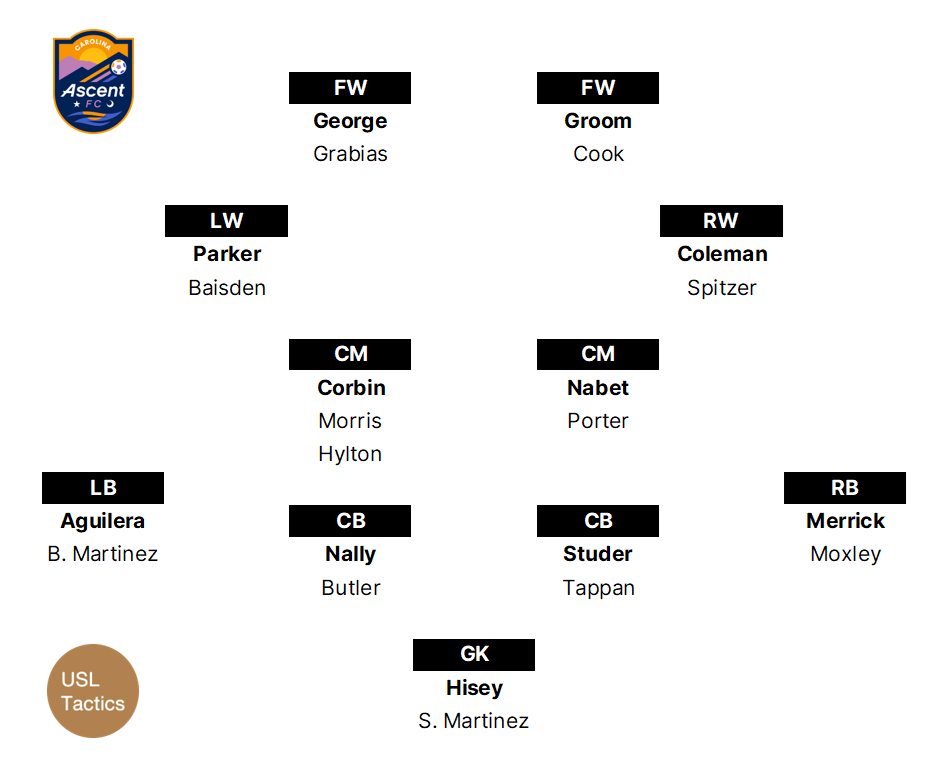
Added
- Hope Hisey, GK: The Super League’s twice-reigning Goalkeeper of the Year, Hisey represents an undeniable upgrade for a Carolina side that already went two-deep with strong goalies last season. Hisey posted a 76% save percentage for Spokane and made 1.8 in-box interventions per match; both marks were elite. Moreover, the 25-year-old is an extremely strong long passer that can kickstart the Ascent’s first phase.
- Reese Tappan, CB: A teammate of Hisey’s in the Pacific Northwest, Tappan didn’t miss a minute in the Zephyr back line last year. Having won 63% of her ground duels but only 47% in the air, Tappan is a strong starter at the Super League level but is best used next to a brawnier partner.
Lost
- Meagan McClelland, GK: McClelland pipped Hisey for the Golden Glove (i.e., least goals allowed per 90) in the 2024-2025 campaign but lost her job to Sydney Martinez late-on in 2025-2026. Carolina clearly made elite goalkeeping their priority this offseason, and that made McClelland expendable.
- Tyler Lussi, AM: A starter off the wing throughout last season’s home stretch, Lussi’s NWSL-tested profile was a boon for the Ascent. The 31-year-old decamped for DC over the offseason, taking a key bit of wide goalscoring along with her.
Where they stand
In the 2024-2025 season, the Carolina Ascent fell in the Super League’s playoff semifinals. They pushed a step further in 2025-2026, losing in the title game. The next step is clear: Phillip Poole and this Ascent side are gunning for it all this autumn.
Even as they upset Sporting Jax in the first round of last year’s postseason, it was hard to escape the third-place feeling for Carolina. This team took home a proverbial bronze medal in terms of xG, xG against, defensive efficiency, and field tilt in the data tables. Poole’s consistent use of a highly pressureful 4-4-2 did allow the Ascent to lead the division in final-third recoveries, and Carolina certainly ended the year on a heater. The goal is to maintain the voracious form from the spring into the new campaign.
For a club that finished with a perfectly modest +0.8 goals prevented mark across their goalkeeping platoon last season, adding a netminder of Hisey’s caliber is one way to get over the hump. While Sydney Martinez was strong down the stretch, Hisey’s ceiling is unmatched – even if she isn’t playoff proven. At the attacking end of the pitch, the return of forwards Shea Groom and Ava Cook – both signed last January, midway through the season – will give the Ascent added panache from opening day onward.
(Goalkeeping aside! When Megan McLelland started last season, her average pass travelled just 14 yards upfield to rank as the shortest among Super League goalies. Martinez’s mark of 32 yards, meanwhile, was the highest of any regular starter. How Poole squares that circle will be fascinating with Hisey as the #1.)
That clarity at the striker spot can’t be underestimated. In the first half of last season, Carolina turned a staggering 30.4 box touches into a good-not-great 1.60 xG on a per-game basis. In the second half, the use of superstar forward Mackenzie George next to Groom and the evolution of Mia Corbin into a center mid made Carolina far more efficient; they used 25.1 per-game box touches to generate a sizzling 1.91 xG.
Corbin’s late-arriving threat helped the cause, as did a greater sense of intention and decisiveness close to goal. The Ascent didn’t reinvent the wheel down the stretch; they simply got sharper where it counted.
Here, that’s easy to see. Carolina works from back to front here, driving through the opposition into the feet of right back Addisyn Merrick. The structure of the Ascent’s 2-4-4ish build shape is expansive, stretching the defense and opening room for an underlapping dribble. While Carolina doesn’t initially have their No. 9s presenting an in-box threat, that quickly changes.
As Merrick dances upfield, George drops in to double the gravitational threat; multiple defenders step as a result. There’s space to be had, and Groom takes it by slashing into the box from the left pocket. While the passing through zone 14 is a bit slapdash, it’s effective. Groom gets a touch, George curls back around her, and the flowing interchange between the No. 9s results in a dangerous shot near the penalty spot.
That’s Carolina at their marauding best, but it elides the defensive quality and late-breaking directness that powered their run to last year’s title game. Jenna Butler (68% duel win rate) was a rock in central defense down the stretch. Sydney Studer’s return will add poise in spades, and signing a proven option like Tappan is a boon for this club’s depth. Carolina brings the Super League’s best traditional fullback pairing to bear as well; Jill Aguilera (0.34 xG+xA and 2.1 takeaways per 90) is unmatched off the left, and we just saw the ingenuity Merrick brings from the right.
You could argue that Carolina maybe needed one more midfield piece to level up, but trusting last year’s core and adding the best goalkeeper in Super League history is an admirable bit of work. It’ll be a surprise – and, frankly, a disappointment – if Carolina isn’t pushing for the #1 seed for a third consecutive season.
Dallas Trinity
Last Year: 4th, 40 points (-4 GD, +3 xGD)
Roster Breakdown
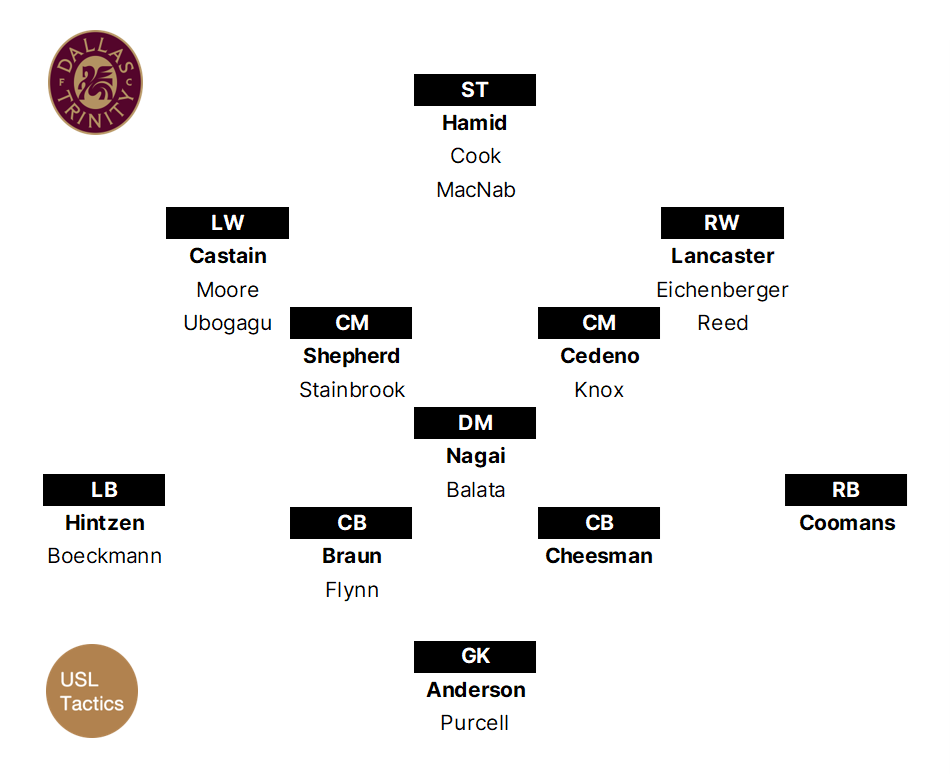
(4-3-3, but with plenty of variation)
Added
- Ally Cook, FW: Cook scored five times for Spokane last year, ranking in the 75th percentile with 5.5 box touches per 90 along the way. Given the makeup of Dallas’ attack, that presence will be key; Cook can score but is equally happy to occupy opponents in and around the 18-yard area.
- Kelea Eichenberger, AM/FB: 6’0” tall and left-footed, Eichenberger showed off unicorn traits at the University of Washington that earned an NWSL chance earlier this year. In her final year in school, she rated in the 99th percentile in attacking duel attempts per reception (per American Soccer Analysis) and illustrated bold final-ball instincts. At the same time, Eichenberger offers up enough poise to fill a defensive spot in more of a phase-based formation.
- Felicia Knox, CM: Knox, 25, is a terrific ball-mover in the midfield that put up 0.15 xA per match across her stints with Fort Lauderdale and Spokane. In a crowded position group in Dallas, the former University of Alabama star provides Super League-proven quality.
- Carissa Boeckmann, CM/FB: Boeckmann, signed from Benfica, made five appearances in the UEFA Champions League last year and is an immensely exciting signing for Dallas. The 23-year-old probably profiles as a No. 8 or shuttling No. 10, one that can do the dirty work between lines under Lee Nguyen. Like Eichenberger, Boeckmann was used as an experimental defender in preseason play.
- Sophia Braun, CB/CM: An Argentine international, Braun spent two years as a standout in the Spokane midfield before moving to Texas this summer. Braun brought a classic box-to-box profile to bear, having ranked in the 75th percentile or better among Super League center mids for both xA and defensive actions while with Zephyr. Internationally, however, she’s operated as a center back and is likely to play there at the Cotton Bowl.
- Maddy Anderson, GK: Signed off Lens in France’s Premiere League, Anderson posted 4.0 saves per game for a newly promoted side last year while stopping 68% of the attempts she faced. The SEC Goalkeeper of the Year in her final college season, the 24-year-old will hope to face far less danger in Dallas – though that experience proves her shot-stopping capabilities.
Lost
- Allie Thornton, FW: The Super League’s inaugural Golden Boot winner, Thornton struggled to recreate that form in the 2025-2026 season. The striker’s shot attempts fell by 35% year-over-year, rarely bringing the creativity to make up for that deficit. Thornton was fine instead of great, so Dallas sought out an upgrade this summer.
- Samar Guidry, RB: Guidry was key to Dallas’ system last year, often staying home as an elbow-ish right back that sat in as a resting central defender. That role took discipline but was also specific to the Thackeray-Petrucelli model, hence why Trinity moved on for the new year.
- Amber Wisner, CB: Wisner didn’t miss a minute across her two seasons at the Cotton Bowl, gracefully moving from the No. 6 spot into central defense for the 2025-2026 season. Her ability to lead Dallas from the back was key to Trinity’s consecutive runs to the postseason; moreover, she was dribbled past just 0.32 times per match last year and was a model of defensive consistency.
- Hannah Davison, CB: Davison brought extremely smooth passing to the table from central defense, but she looked markedly less comfortable expressing herself in her second season with Dallas. Though she’ll turn 30 this year, Davison still strikes me as a player that could meaningfully contribute as a Super League starter.
Where they stand
No team has remade themselves as thoroughly as Dallas Trinity this offseason. That’s equally true on and off the field. The club is now owned by the same group spearheading the Atletico Dallas expansion effort in the men’s USL, and they’ve made their presence felt immediately. General manager Chris Petrucelli – the architect of Trinity’s first two seasons – and short-lived head coach Nathan Thackeray are out; former New England Revolution stalwart and tenured NWSL assistant Lee Nguyen is in.
Regime change always introduces uncertainty, and that’s especially true in the context of a truncated 2026 schedule. Nevertheless, Dallas returns a fair share of a playoff core – notwithstanding Davison and Wisner in the back line – and thus have a solid base to build upon. Nguyen’s challenge is to balance the familiar faces, a relatively successful existing tactical framework, and a slew of exciting new signings with the realities of the Super League grind.
Up top, Cook is one of many ex-Spokane players joining Dallas, and she’ll be expected to contribute from the jump. If preseason lineups are any indication, Jasmine Hamid – previously a winger with Fort Lauderdale and in her brief spring cameo with Dallas – will start as the No. 9 with a full preseason under her belt in Texas. The profile at striker will, undoubtedly, look different as compared to the bygone Thornton era.
The midfield has been Trinity’s most notable point of recruiting emphasis. Boeckmann is a capable box-to-box polymath who could also fill fullback minutes in a pinch. Knox is exceptional for her incision. Jamie Shepherd and Aria Nagai surely aren’t coming on loan from the NWSL just to sit, and the same could be said for 19-year-old Sofia Cedeno as a No. 10. That only covers the central spots, where Heather Stainbrook and Wayny Balata were excellent in 2025 and are also back on the roster – health questions notwithstanding.
No matter who starts, Dallas is in line to be a flexible attacking unit in 2026. As laid out in 3rd Degree’s excellent preseason reporting, Trinity have experimented with soft back three and a 2-2-4-2, with one of the fullbacks stepping into a resting pivot in that latter. We’ll see how Nguyen shakes things out, but there’s precedent for such flexibility at the Cotton Bowl.
Last year, Dallas also succeeded on the back of structured-yet-fluid offensive patterns. Here, you see Trinity in a 2-3-2-3 setup that seems tailor-made for the 2026 roster. Initially, the fullbacks sit level with a lone No. 6, and left back Cyera Hintzen essentially creates a passing triangle in combination with the more advanced lines. Because Hintzen and the near No. 10 (think Cedeno from this year’s roster) are narrow, space opens to isolate Chioma Ubogagu as a wide receiver.
When the pass is released toward the left winger, Hintzen tears forward on the underlap, essentially creating a three-on-two against the far side of the opposing defense. The combination play is pristine, and it creates a terrific crossing opportunity to right winger Camryn Lancaster at the far post. Between the narrow fullback play and side-to-side balance, it’s a terrific team move full of promising tactical tics.
This year’s iteration of Dallas has the talent to build on those kinds of plays, but is there enough of a defensive backstop in place? That’s the big question for this club. Between ex-RC Lens goalkeeper Anderson and former Brooklyn standout Neeku Purcell, the goalkeeper position is in good hands. The back line is strong at the top end, but it looks somewhat thin in totality.
Lauren Flynn is a strong returner in central defense, and Braun looks to be a keen addition – even if she almost always operated as a No. 8 in Spokane. Sydney Cheesman can feasibly fill a central spot or start at right back, and Drew Coomans – a former Ivy League Defender of the Year – will push her for minutes. Hintzen is back, and Boeckmann could start in her stead depending on Nguyen’s shape. It’s certainly not bad, but there’s potential for “square peg, round hole” chemistry issues as the midfielder-defender combos try to settle during a short fall campaign.
For my money, Dallas has the biggest gap between ceiling and floor of any club in the Super League. 2026 is clearly a rebuilding year under Trinity’s new ownership, and it’ll be a challenge for Nguyen to hit the ground running. That said, I really like the business Dallas has done, and it’s easy to make the case that they can improve on last year’s results.
DC Power
Last Year: 6th, 33 points (+2 GD, +6 xGD)
Roster Breakdown
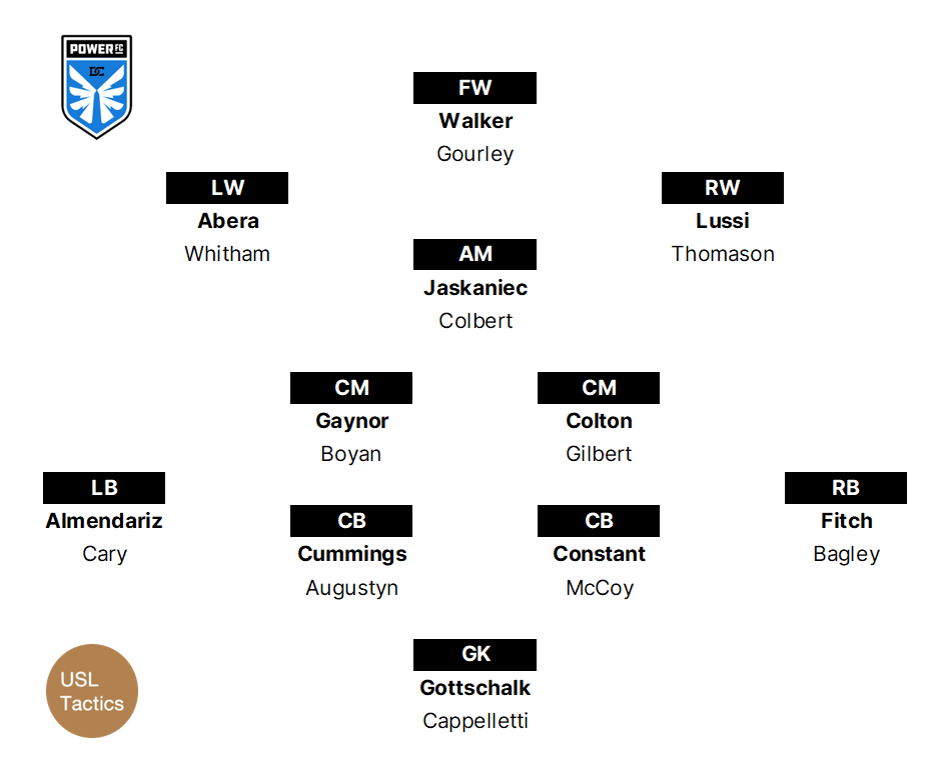
(4-2-3-1 or 3-4-3)
Added
- Tyler Lussi, AM: Lussi was a difference-maker for the Ascent after signing for the spring half of the season, putting up 3.4 shots and 0.58 xG per 90 while playing off the wing. A regular NWSL contributor up until last year’s move to Carolina, the 31-year-old should be one of the top attacking mids in the Super League this fall.
- Emma Jaskaniec, CM/AM: A workhorse that played every spot from second striker to No. 6 during her time in Spokane, Jaskaniec is the kind of “glue” player that makes any soccer team better. The former Wisconsin star brings a battering ram sense of physicality to the midfield that’ll help DC look steelier in important spaces across the pitch.
- Kayla Colbert, AM/FW: A native of Southern California, Colbert put up 31 goal contributions in four years at USC and had brief NWSL cups of coffee in Utah and Kansas City. Her best moments in college came as an inverted right winger, one with a real sense of composure in and around the box.
- Sarah McCoy, CB: McCoy spent two years in Spokane, including a 2024-2025 season where she didn’t miss a single minute in central defense. Strong in the air and functional as a passer, the 27-year-old adds an unflappable aspect to DC Power’s back line.
Lost
- Alexis Theoret, CM/AM: A key creative presence in DC’s midfield, Theoret ranked second among Super League center mids in touch share. Her dual ability to set the tempo and provide progressivity when needed was a key part of Power’s 2025-2026 attack.
- Jaydah Bedoya, AM/LB: Bedoya, 24, capably filled wide spots on both sides of the pitch last season, earning a national call-up for Puerto Rico for her efforts. Across wingback and winger minutes, she put up a stellar 5.4 progressive carries and 0.34 xG+xA per 90; at the same time, her defensive positioning didn’t always mesh with DC’s structural aims.
- Madison Murnin, CB/LB: Murnin spent two seasons in DC, operating as a flexible defender across nearly 2,500 total minutes. Though somewhat inefficient at the back – Murnin’s duel win percentage persistently hovered at or below 50% – the former UCF standout was always workmanlike for Power.
- Morgan Aquino, GK: Another two-year player on the way out, Aquino started nearly 40 matches for DC and prevented 1.1 goals above expected during that extended run-out. Aquino’s prior experience in the A-League once earned a senior call-up for the Australian national team, and she’s still got oodles of potential at age 24.
Where they stand
With a 66% minute retention rate, DC has prioritized continuity heading into the 2026 sprint season. For a club that flirted with playoff qualification throughout all of last year, it’s a strategy that holds water. Omid Namazi’s first year in charge saw DC Power finish second in the Super League for run-of-play xG (37.8) but second-to-last in set piece xG (7.8). No team scored less often from dead balls, and no team struggled as mightily to finish good chances.
Namazi’s ability to corral his roster into a sharp possession team was immediately clear irrespective of finishing. Whether running a three- or four-at-the-back shape, Power were consistently good about breaking their opponents down. Last year, DC completed 331 passes per game (third in the Super League), of which 141 came in the opposing half (first). Bouncing outside-in through fullbacks like Paige Almendariz (9.7% touch share) and Susanna Fitch (11.2%) will remain at the core of the system; admittedly, losing Theoret’s midfield incision hurts DC’s penetration closer to goal.
Though Power put up strong numbers, they could stall out close to goal when the game slowed down. The club’s recruitment over the offseason is meant to change that.
I’ve loosely marked up DC in 4-3-3 mode here to highlight (a) their occasional lack of mettle and (b) the utility of Lussi within this attacking corps. In this case, the Lussi-led Carolina Ascent restart possession with a long ball, one where the returning pivot pairing of Justina Gaynor and Emily Colton lose out on the initial header. The problems compound from there; a step from DC’s defensive line is a shade slow, and there’s suddenly a three-on-three developing.
DC doesn’t allow an instant breakaway, but they can’t stop Carolina from finding a cross and targeting Lussi at the far post. Power scored just five headed goals throughout all of the 2025-2026 season, and they rarely produced this kind of dump-and-run opportunity. Namazi surely won’t reinvent the wheel in favor of a hyper-direct system, but players like Lussi, Colbert, and Tatum Thomason (2.9 progressive runs per game, 25% progressive pass rate at Arizona State) give this offense a greater ability to speed the game up. Likewise, Jaskaniec’s do-it-all mettle in the midfield adds a needed combination of duel-first grit with clever trailing movement.
Jaskaniec isn’t the only impact player moving over from Spokane. Indeed, McCoy adds crucial depth to DC’s back line. Paired with the excellent Sydney Cummings – herself a Zephyr player in 2024-2025 – and a fit Claire Constant, there should be genuine competition for starting minutes at the back. That depth is valuable in and of itself, but it also gives Namazi the option to confidently go three-at-the-back if the matchup demands it.
For a club that’s so laser-pointed toward a clear, successful game model, the biggest question mark lies at the forward positions. Gianna Gourley (eight total goals, 0.48 xG per 90) got red-hot toward the middle of last season, but Alyssa Walker (seven total goals, 0.57 xG per 90) seemed to supplant her late-on. Both forwards give you a classical No. 9’s profile, and both know how to work with the clever Loza Abera. Balancing minutes between that stable of forwards will be tricky – though that’s a good problem to have.
We know that DC Power will play attractive soccer, and they’ve added a number of versatile, high-ceiling players at every level of the pitch. Still, did DC do enough to level up into contender status? Time will tell.
Fort Lauderdale United
Last Year: 9th, 23 points (-32 GD, -28 xGD)
Roster Breakdown
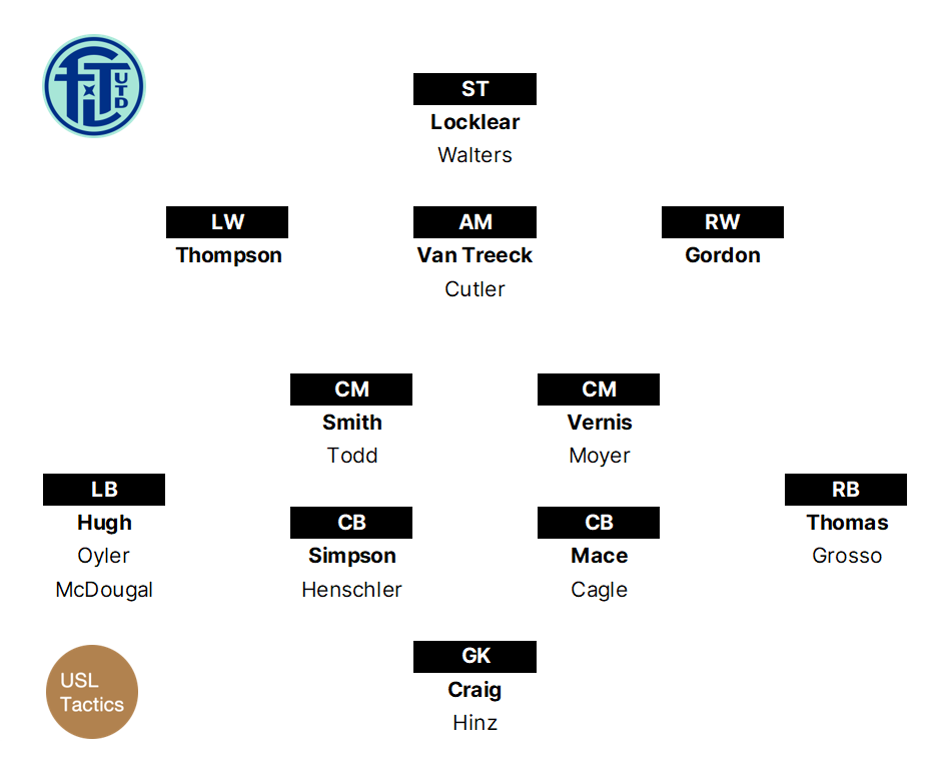
(4-2-3-1)
Added
- Farrah Walters, FW: Walters was apoplectic during her final season at Duke, dropping 1.08 xG+xA per 90 in roughly 700 minutes. Moreover, 35% of Walters’ receptions came in the box, evidential of a sharp eye for space. The forward won’t be much of a target at 5’6” but has massive scoring upside in Fort Lauderdale.
- Grace Cutler, AM: A teammate of Sh’nia Gordon at West Virginia, Cutler brings a strong offensive profile off the wing. Now 29, Cutler has spent time in Italy, Croatia, and Japan since then and ought to bring veteran nous to South Florida.
- Kelsey Oyler, LB/CB: Oyler was a versatile presence at the back for Spokane last season, providing vertical passing and strong one-on-one play in equal measure for Zephyr. At worst, she’ll compete for regular starting minutes in Fort Lauderdale.
- Haley Thomas, RB: While Thomas’ expected goal contributions fell by about a third in 2025-2026 as compared to 2024-2025, the numbers are misleading. Now 27 years old, the right back gamely took up a steadying, stay-at-home role for Spokane – even tucking in as a No. 6 at points. Fort Lauderdale lacked composure across the defensive zone last season, and Thomas goes a long way in making up that gulf.
- Heather Hinz, GK: Hinz appeared twice for United in their inaugural season before spending last year in Australia. Now signed full time, she’ll hope to build on the very solid 1.15 goals per game she allowed in Sydney. How Hinz profiles on the ball will be fascinating; she attempted 30% less passes in 2024-2025 than bygone goalkeeper Bella Hara did in Fort Lauderdale’s net last season.
Lost
- Kathrynn Gonzalez, CM: Gonzalez filled more than 1,200 minutes in Fort Lauderdale’s midfield in 2025-2026, putting up a very strong 1.2 key passes per game along the way. While she brought incisive instincts to the table, Gonzalez couldn’t elevate a central group that often felt like a patchwork quilt across multiple coaching regimes.
- Laurel Ansbrow, CB: Last season, Ansbrow ranked between the 50th and 75th percentiles for ground duel wins, recoveries, touches, and long completions at her position. In terms of competent central defensive play with progressive upside, Ansbrow was as reliable as possible, and it’s no surprise that she’s in the rotation for the NWSL’s Boston Legacy post-loan.
Where they stand
In their debut season, Fort Lauderdale and manager Tyrone Mears were the sharpest possession team in the Super League and rode that identity to the 2024-2025 final. Mears stepped into the front office in year two, and United simply collapsed. Despite retaining a core of attacking holdovers, Fort Lauderdale finished with an expected goal margin of -1.0 per game. Ultimately, they landed at the bottom of the table between Ali Rogers and Paul Jennison’s reigns on the sideline.
Now, Mears has taken up the coaching mantle anew for 2026. Fort Lauderdale spent the offseason revamping their back line around proven veterans and retrenching their attack with younger additions. The hope is that it’s enough to reprise the highs of United’s expansion campaign.
That year, Mears' side contested 14.1 pressing sequences per game, roughly the league median. In 2025-2026, that number plummeted to 10.8 – the lowest for any team in the Super League's short history. In turn, opponents needed 35 less final-third passes to generate each of their expected goals, a shocking drop that was facilitated by United’s inability to contest build-up play. Still, defense needn't be the only answer; Fort Lauderdale can also improve by posing a greater threat with the ball.
The lion’s share of last year’s offense is back in action; Fort Lauderdale only scored 30 times last year, but players responsible for 70% of those tallies are back. The question is how this club can spotlight said stars. In this case, Fort Lauderdale bends their shape to activate Sh’nia Gordon off the right wing and create a chance.
United are initially in 4-2-3-1 mode, but they drop returning right back Julia Grosso low into a pseudo-back three. That action pulls the opposition high, clearing space for Gordon to receive in open space. Though she’s initially got her back to goal, Gordon – who put up 3.9 progressive carries per game last year in spite of cratered xG and xA numbers – is exactly where she wants to be. A quick turn inside puts Fort Lauderdale on the front foot.
Supporting runs develop via Kelli Van Treeck (the No. 10; skewing right to replace the dropping winger) and Kiara Locklear (the No. 9; pushing centrally) to expand the threat. In tandem, the fast-paced runs attract the defense’s attention and allow for a switch toward left back Abi Hugh. In contrast to Grosso, Hugh is allowed to fly upfield, receive in space, and attempt a dangerous through pass. Though that ball is cleared to earn a corner, the entire sequence – every key player in which will be back for 2026 – is emblematic of peak Fort Lauderdale.
How to turn the balance away from meek, low-block absorption toward the spark we just saw? Mears and his staff are betting that a few key defensive additions can complement a contingent of holdovers to get that job done. Ella Simpson (6.0 clearances per game, 56% duel win rate) started 21 matches last year, while no other center back got above 13; she’s the anchor. Likewise, the hope is that Margot Mace – added in mid-March – can settle things down alongside additions like Oyler and Thomas.
That pair of ex-Spokane defenders both posted 8% touch shares and progressed the ball by more than eight yards per pass last season, indicative of a verticality and directness that Fort Lauderdale rarely prioritized. The same sensibility defines Hinz as a play-starter in net, and it could hint at a change in initiation style.
Even if United is more comfortable at the back, they may not have enough second-ball mettle in front of the defense. Lexington loanee Nicole Vernis is a ball-moving No. 8 with tremendous upside, and Shea Moyer will never give less than 100% in a box-to-box role. Who’s supposed to stop opposing attacks is less clear. Maybe Taylor Smith, now 19, can elevate after playing nearly 1,700 minutes last season, but her 34% ground duel rate doesn’t scream “destroyer in the making.”
In other words, Fort Lauderdale’s case for a playoff return feels contingent. You can paint the mental picture of a bright, vertical team that’s stable enough at the back and totally vivacious up front. At the same time, it’s easy to see where that formula could go wrong. Fort Lauderdale has improved over the summer, but I don’t know if they’ve improved enough.
Lexington SC
Last Year: 1st, 53 points (+26 GD, +17 xGD)
Roster Breakdown
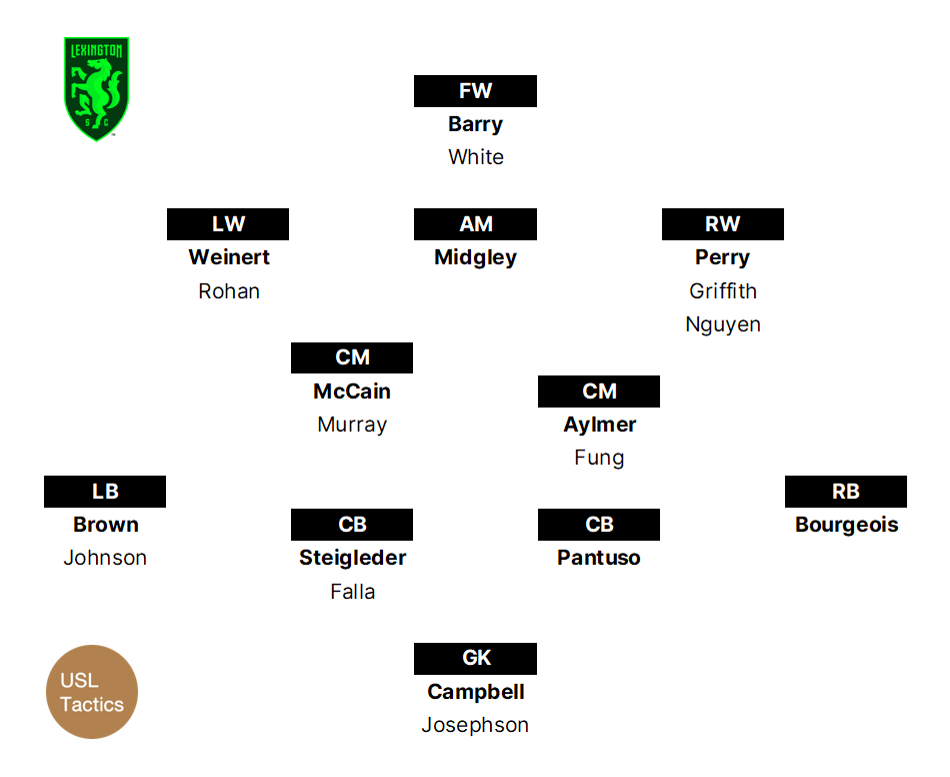
(4-4-2 into attacking 3-2-5)
Added
- Mac Midgley, AM: Midgley often starred as a right halfspace attacker at the University of Tennessee, putting up nearly eight progressive actions per 90 along the way in her final season. Meanwhile, her expected assists (2.8) actually exceeded her expected goals (2.4) total. Comparing Midgley to a proto-Addie McCain is probably overzealous, but there’s a similar do-it-all threat at play.
- Ally Perry, AM: Signed via transfer from Juventus, Perry only played a handful of games in Europe but was a truly dominant attacking presence for Mississippi State last season. There, the primarily left-footed attacker scored eight goals while putting up 0.18 xA and 6.5 progress actions per 90. She adds yet another head to Lexington’s attacking hydra.
- Gracie Falla, CB/LB: Falla essentially signed a pre-contract with Lexington while she was running the show at the University of South Carolina, and she has the making of an impact defender for 2026. Most often used as a left-sided center back, Falla won 5.5 defensive duels per game in her final college campaign and brings real safety as a passer.
- Ryan Campbell, GK: The likely starter in net for Lexington, Campbell is on loan from the NWSL’s Gotham FC. While she’s seldom seen game time as a pro, Campbell posted a hilariously low 0.4 goals against average in her senior year at UCLA and stopped 82% of shots faced for Stanford the season before that.
- Marz Josephson, GK: Josephson’s adjustment to professional life will (hopefully) be minimal after signing out of the University of Kentucky, where she put up 2.3 saves per 90 while allowing just 0.7 goals per game over her last two years. Though Josephson gives up three inches of height as compared to the outgoing Kat Asman, she clearly makes up for it in terms of instinct.
Lost
- Kat Asman, GK: Having allowed just 0.86 goals per 90 last year, Asman won the Super League’s Golden Glove and was impeccable during LSC’s title run. The 26-year-old was on loan from Orlando all, and she’s since been sent out to Denver during the ongoing NWSL season.
- Maddie Perez, CB: Perez was a regular starter in Lexington’s (semi-disastrous) debut season in the Super League and took a back seat last year, but she’s a talented, technical defender on her day. More than anything else, Perez’s year-over-year role change from “stalwart” to “end of bench” indicates the leap LSC took in their Players’ Shield-winning campaign.
Where they stand
Lexington’s improvement between the 2024-2025 and 2025-2026 seasons is one of the most impressive accomplishments in the history of the USL. Nothing is guaranteed in the Super League, and the fact that LSC identified a core of players that could mesh together, execute a discernible tactical system, ride out a coaching change, and still win it all is remarkable. When you’ve conquered the world in such exhilarating fashion, what’s left to do? For Lexington, repeating the trick had become the challenge.
Kosuke Kimura will be the head coach from opening day onward this time around, and he’s brought back a Players’ Shield winning core. While Asman is a loss in net, there simply isn’t another club that can match Lexington’s blend of star power and structure. Catherine Barry (16 total goals, 3.8 aerial wins per 90) is the league’s best No. 9. Behind her, Addie McCain (0.47 xG+xA per match) presents a threat from anywhere in the opposing half. Despite what the all-league voters might tell you, Alyssa Bourgeois is the league’s most exciting right back. She’s given the freedom to get forward because of Taylor Aylmer’s preternatural instincts at the No. 6 spot – not to mention the poise of defenders like Regan Steigleder and Allison Pantuso.
Because of their ultra-stingy 4-4-2 defensive shape, Lexington’s opponents underperformed their expected competition percentage by 3.1% in 2025-2026. With Kimura emboldened by a full preseason run-up, that same level of disruption should only increase.
Part of what makes LSC special is a keen ability to win second balls and quickly turn defense into offense. Here, for instance, you see the champs defending a restart in their 4-4-2, goading the opposition into a long ball. Steigleder wins the initial header, but that’s not the crux here; instead, it’s the voracious pursuit of the knockdown that stands out.
Aylmer (5.8 recoveries per game) and her pivot partner both close to the loose ball, and Sarah Griffith’s pinch off the right wing helps their cause. Griffith’s move might seem innocuous, but it’s indicative of the find-and-replace nature of Lexington’s transition game. This team is incredibly good at dropping attackers – think Griffith, McCain, or even Barry – low or inside and immediately replacing them with a vertical runner. In this case, Griffith drops, helps secure the recovery, and gives Barry the space to make a diagonal run. In an instant, LSC can cross toward McKenzie Weinert and nearly create a goal.
What’s especially exciting heading into 2026 is how Lexington might level up their offense. For as good as this team looked, LSC also had spells of fruitless possession where they failed to speed the game up; that was the big problem during a dip in form early last spring. Kimura eventually got over that hump, but players like Perry and Midgley are purpose-designed to carve through set defenses.
The abundance of attacking midfield talent should free McCain to play deeper, much as she did with Fort Lauderdale in the 2024-2025 campaign. Lest you doubt her ability to thread the needle as a No. 8, McCain put up 12 goal contributions while adding more than five recoveries and five defensive actions per match that year. A changed role isn’t a given, but the fact that it’s a viable option says everything about the defending champs’ improved depth.
If you want to be worried for whatever reason, goalkeeper is the only spot where Lexington will undergo a big change. Kat Asman is back in the NWSL, and LSC has replaced her with a mix of loan talent (Campbell) and Kentucky-proven quality (Josephson). The replacements in net both look extremely promising, but goalkeeper is always a position wrought with variation at this level.
Still, if that’s the biggest nit you can pick, it shows that Lexington is in terrific shape for 2026. Defending a title is never easy, but LSC must be the Super League’s favorites heading into opening day.
Sporting Jax
Last Year: 2nd, 53 points (+22 GD, +14 xGD)
Roster Breakdown
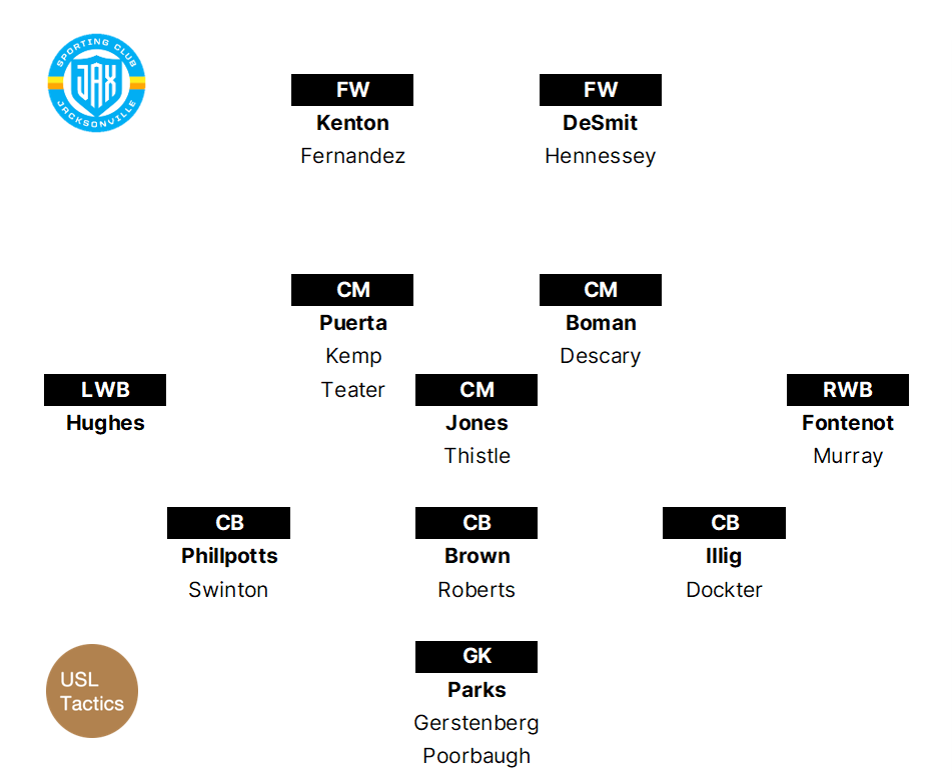
(3-5-2)
Added
- Ginger Fontenot, RB/LB: Fontenot, 24, put up a scintillating 0.40 xG+xA per 90 while covering both sides of the pitch for Spokane last season. Likely to start off the right for Jacksonville, Fontenot will elevate the attacking threat offered by that side of Stacey Balaam’s system.
- Mya Swinton, CB/AM: Most of Swinton’s college career took place at the D-II level, where she lit it up with more than 50 goal contributions over four years. If preseason friendlies are any indication, Swinton is apparently in the rotation mix in central defense; she could feasibly play anywhere from the left side of a back three to the right wing throughout her rookie season.
- AJ Hennessey, AM: A weapon through the right wing and halfspace, Hennessey put up 0.35 xG+xA per 90 during her final year at TCU but primarily shone as a connector. The midfielder completed 42 passes per game as a Horned Frog but paired that safety with 90th percentile completions into the box – the kind of profile that’ll fit like a glove in the Sporting midfield.
Lost
- Jade Pennock, FW: Pennock scored three times in just over 900 minutes for Sporting, often providing a workmanlike presence off the bench. Jacksonville will roll into the new year with two starting forwards that can hold play up, but they don’t have another classic No. 9 as a “break glass in case of emergency” option in the manner that Pennock provided.
- Kacey Smekrud, RB: Smekrud was effective down the stretch as a midseason acquisition, but her return of two goal contributions didn’t do enough to balance out a left-dominant Jacksonville offense. Fun fact: Smekrud played for Lexington back in their pre-professional W League era.
Where they stand
You’d be hard-pressed to find a more successful expansion season than Sporting Jax’s 2025-2026 campaign – both on and off the pitch. Jacksonville led the Super League in attendance thanks to a strong season ticket base, and their confident roster-building under manager Stacey Balaam led to instant success. The core responsible for 81% of this club’s minutes are back for more, and the goal is nothing less than silverware this fall.
Balaam’s system was incredibly fun to watch, defined by its ability to dominate the halfspaces out of a 3-5-2ish formation. Jacksonville is never afraid to set the tempo between Kaitlyn Parks (45 passes per game) in goal and Sophie Jones (9.6% touch share) at the No. 6 spot in order to open space upfield. Interpret that shape descriptor with a grain of salt; between marauding underlaps via center back Grace Phillpotts, box-centric movement from Ashlyn Puerta – the reigning Super League Young Player of the Year – and sharp interchange everywhere else on the pitch, Sporting’s unpredictability is their strength.
Between Puerta’s world-class movement and the do-it-all profiles of Paige Kenton and Baylee DeSmit up top, Jacksonville won’t lack for firepower this year. What’s equally important is the quality of the press and counterpress anchored by those same players. Sporting finished last year top-two in terms of final-third recoveries, recovery margin, field tilt, and breaks against. They’re incredibly good about winning the ball back high upfield and immediately presenting danger.
We start in media res here to make that essential point. Jacksonville has pushed their right wingback and right-sided center back upfield to make a stop, but their intervention doesn’t stop a pass into the channel. That’s where Sophie Jones – one of the Super League’s best No. 6s – comes in. Jones thinks multiple steps ahead, body-faking to deny a pass to her right before pinching back toward the left to make an interception.
Because Jones instantly turns the interception into a progressive pass, the pitch is flipped in an instant. Upfield, DeSmit receives on the drop, and Jacksonville blossoms into action around her. Kenton, her partnered No. 9, makes a vertical run into the seam; Puerta loops left to replace DeSmit. You’d hope that Sporting could immediately create a chance, but DeSmit wisely slows the play down, engaging with the right wingback and midfielder Sophia Boman to overload the halfspace.
Because Jacksonville flood so many numbers forward, the opposition leave Kenton open in a one-on-one. She receives, Puerta pushes far post, and the ensuing cross toward the U.S. U-20 star earns a corner kick. It’s a model example of Jacksonville’s ability to counterpress, find their footing, and drive toward goal.
That Jacksonville can play with such upfield confidence is also a reflection of their excellent, trustworthy back line. Georgia Brown, a full Scottish international, plays with a veteran poise well beyond her 23 years in the center of the defensive line. Phillpotts (11% touch share, 9.8 vertical yards per pass) should start to her left, and Maggie Illig (7% touch share, 4.6) yards) has the inside track on the right. You can see the tilt of Sporting’s offense through their numbers, but both are solid in-box presences as required.
It’ll be a shock if Sporting aren’t a top-three team this year, even if this offseason’s business has been somewhat quiet. Fontenot projects to level up Jacksonville’s threat at right wingback, and college additions like Swinton and Hennessy are nothing if not promising; versatility unites all of the new faces. Given what Sporting Jax is bringing back, they should be seen as one of the Super League’s top sides.
Tampa Bay Sun
Last Year: 8th, 24 points (-19 GD, -14 xGD)
Roster Breakdown
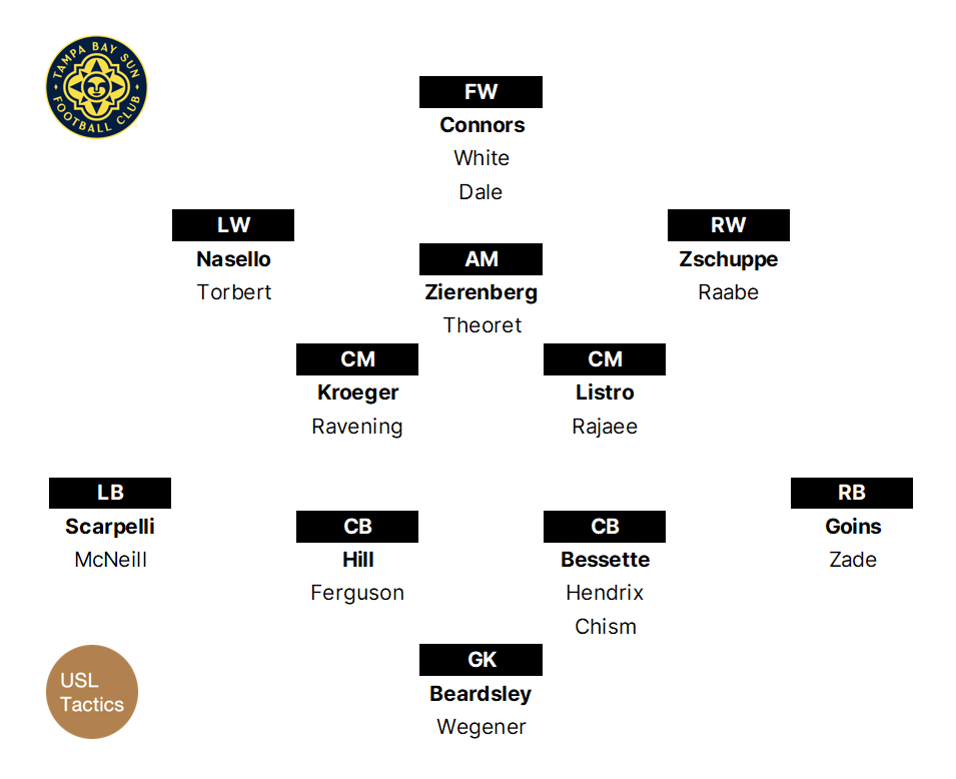
(4-2-3-1 or 3-4-3)
Added
- Kennedy White, FW: White put up 0.40 goals per 90 in her most recent season with Melbourne, putting up more than three shots a match along the way. Tampa Bay never landed on a strong post-Natasha Flint No. 9 while trying to defend their title, and while White’s profile differs from Flint’s powerhouse hold-up style, there’s real promise in her ability to finish chances.
- Alexis Theoret, CM: Theoret took nearly 70 touches and hit on 8.6 final-third passes per 90 in DC last season, offering progressivity and poise in spades. Provided she stays fit, Theoret should be a stalwart as the Sun try and add more control to their offense.
- Leah Scarpelli, LB/CB: Scarpelli spent two years in Brooklyn, splitting time between the left back spot and a deeper deployment in a back three. The blend of agile, efficient one-on-one defending and accurate crossing that Scarpelli provides makes her one of the Super League’s most complete defenders.
- Tori Zierenberg, AM/LB: Zierenberg put up a sizzling 0.43 xG+xA per 90 in Spokane, most often used as a left winger or wingback in the Zephyr system. Versatility has been a key in Tampa Bay’s recruitment this summer, and Zierenberg’s totality of skills makes her a perfect fit for the Sun.
- Jazmin Ferguson, CB: Ferguson won a whopping 71% of her defensive duels in her final year at LSU, doing so while mostly deployed as a left-sided center back. Ferguson profiles as a safe passer, but that’s a perfectly logical counterweight to the flair Tampa Bay has added elsewhere on the pitch.
Lost
- Carlee Giammona, AM: Giammona was a key member of Tampa Bay’s title team, but her goal contributions were cut in half (from 10 to five) in the 2025-2026 campaign. In her place, the Sun opted for wider-ranging attacking players to mix up their offensive look.
- Maddie Parsons, FW & Faith Webber, FW: Both added mid-season, Parsons and Webber only managed to score two goals apiece. Dig deeper, and that’s just 0.25 goals per 90 minutes between the pair. The Sun had a number of problems last year, and an inability to nail down a consistent No. 9 was one of the foremost reasons for their decline.
- Sydney Schneider, GK: Schneider never settled in Florida, conceding seven goals above expected in her 11 starts for the Sun. The goalkeeper made her last appearance all the way back in December – not that replacing her with Liz Beardsley led to a turnaround, even if Beardsley’s numbers were closer to par.
Where they stand
Defending a title in the USL is always difficult, and the Tampa Bay Sun proved it last year. Denise Schilte-Brown’s side remained relatively successful at influencing matches in the press (see 5.7 final-third recoveries and a +2.7 recovery margin per game) yet lacked the back-end consistency and offensive efficiency to pay it off. Reprising the domineering, in-your-face highs of 2024-2025 didn’t work, and a shape change failed to provide answers.
By any standard, the Sun performed at a sub-playoff level in the 2025-2026 season, yet they were also held back by a league-worst -10 goals prevented mark. In other words, shakiness at the goalkeeper spot in a post-Ashley Orkus world put a lid on Tampa Bay’s dark horse potential. Likewise, the loss of Natasha Flint (now with the Denver Summit) took the shine out of the Sun’s front line. No answer ever arrived at the No. 9 spot, and that made a rich supporting cast far less effective.
White is meant to solve that latter problem, and a returning Shea Connors (who, admittedly, hasn’t scored more than one single goal in a season since 2022-2023) will push her for striker minutes. There hasn’t been a big addition in net, but a slew of exciting defensive signings should make Liz Beardsley and Emory Wegener’s job easier. Indeed, Tampa Bay’s defensive remake looks like the real crux of their offseason.
As noted in RBLR Sun’s preseason coverage, Tampa Bay ran a back four in their last warm-up match with Scarpelli, Kelsey Hill, and Sam Kroeger – all Brooklyn players last season – starting in the back half. Kroeger may prove to be the belle of the ball; she’s a hyper-capable No. 6 that can free Jordyn Listro to be more active, and she’s also versatile enough to fill left back minutes. Generally, raiding a Brooklyn defense that allowed just 11 shots per match last season is a shortcut to chemistry – and that’s before you consider returners like Vivianne Bessette and Brooke Hendrix that are back for a third year.
We’ll see how Schilte-Brown fits the pieces together, but the goal is to reprise 2024-2025’s mix of expansive attacking with underlying structure. Last year, Tampa Bay’s passes per possession fell by 14%, and the attack generated 42% less fast break chances; it was a double-whammy of declines across phases. By strengthening the defensive base and focusing on gravity at the No. 9 spot, the Sun can hopefully reverse those trends.
What might that look like? Here, Tampa Bay is able to thread the needle between pointed attacking patterns and a clarified sense of resting structure. The Sun are basically in 4-4-2 diamond mode here, and the narrowness of their midfield in the build phase draws the opposing defense tight. As such, left back Sabrina McNeill – back for 2026, albeit at a suddenly jam-packed position – can receive in a one-on-one and force a rotation.
McNeill has the skill to beat the closing defender on the dribble, and the break is on. As the fullback pushes inside, the rest of the Tampa Bay shape responds in concert. One of the two strikers skews left to provide width, and Sydney Nasello dashes forward from the No. 10 spot. Crucially, there’s a heady response at the back end of the shape; Jordyn Listro sits in at the No. 6 spot, and the right mid also drops low to provide resting security. There’s a “five forward, five back” structure in place that (a) lets the Sun pose a threat while also (b) denying the specter of any easy counter should a turnover occur.
In the end, the resting numbers prove to be academic. When McNeill releases the ball, there’s threatening movement at the far post. The Sun crowd the box and earn themselves a tap-in. It’s the ideal of what this system could and should look like.
Between midfield presences like Kroeger, Theoret, and ex-Burnley midfielder Millie Ravening, Tampa Bay have leveled up their potential partners for Listro. Likewise, Dasia Torbert, a returning Parker Goins, Zierenberg, and Erika Zschuppe have expanded the Sun’s options across the attacking line and the wide areas. Variety will be key; Nasello is a superstar player, but Tampa Bay has been overreliant on her services. Last year, Nasello took a 10% touch share. The next-highest attacker in the entire Super League was Lexington’s Addie McCain, who only managed an 8% share.
I’ll cop to an implicit bias of mine: if I can’t see an obvious vision taking shape and don’t have full clarity about a club’s tactical system, I tend to be doubtful. That’s a bad instinct, but it also gets at a certain truth. If you’ve got a muddy depth chart that’s overstuffed for the sole purpose of being overstuffed, you’re going to be worse off.
Tampa Bay has oodles of talent – they’ve won the Super League offseason by the measure of “adding talented players en masse.” Now, Schilte-Brown’s job is to get back to basics, instilling a clear system that can get the Sun back to their title-winning highs.