The Back Four: Republic reign
On Sacramento's title, Brecc Evans, and the Super League

Welcome in to The Back Four! Need more USL content? Make sure to:
- Visit Backheeled for my in-depth title game recap.
- Check back with Backheeled for transfer and depth chart tracking. It's silly season!
- Listen to This League! and The USL Show to catch up in podcast form.
Without further ado, let’s get to it.
On the Sacramento Republic
Back in the preseason, I predicted that Sacramento would be a surefire top-three finisher in the West and a potential Players’ Shield contender. From the outside looking in, it was clear that this would be “the USL’s most consistent defense,” with the upside to “be the best team in the Championship.”
I don’t always get things right, but the considerate way this Republic team was built made their upside undeniable. From the hiring of Neill Collins last year to the thorough roster re-tooling that ensued, Sacramento built a team with formidable midfield and attacking depth in front of a defense that’s been this club’s calling card throughout the 2020s. Collins didn’t turn the Republic into an attacking juggernaut; his ability to build a flawless tactical structure and constantly make smart in-game changes was more than enough.
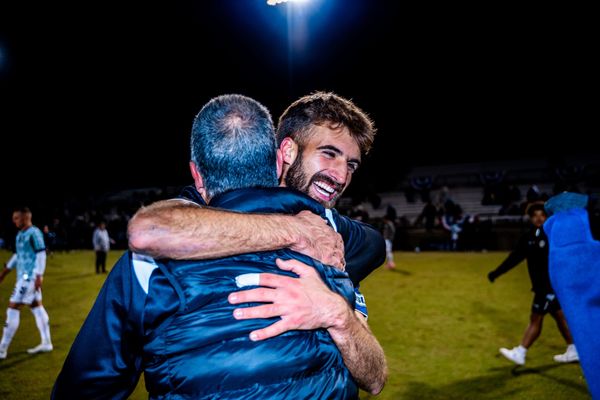
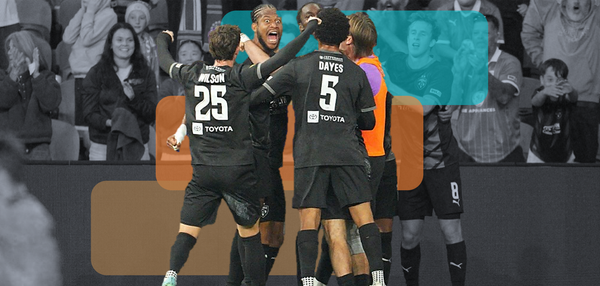
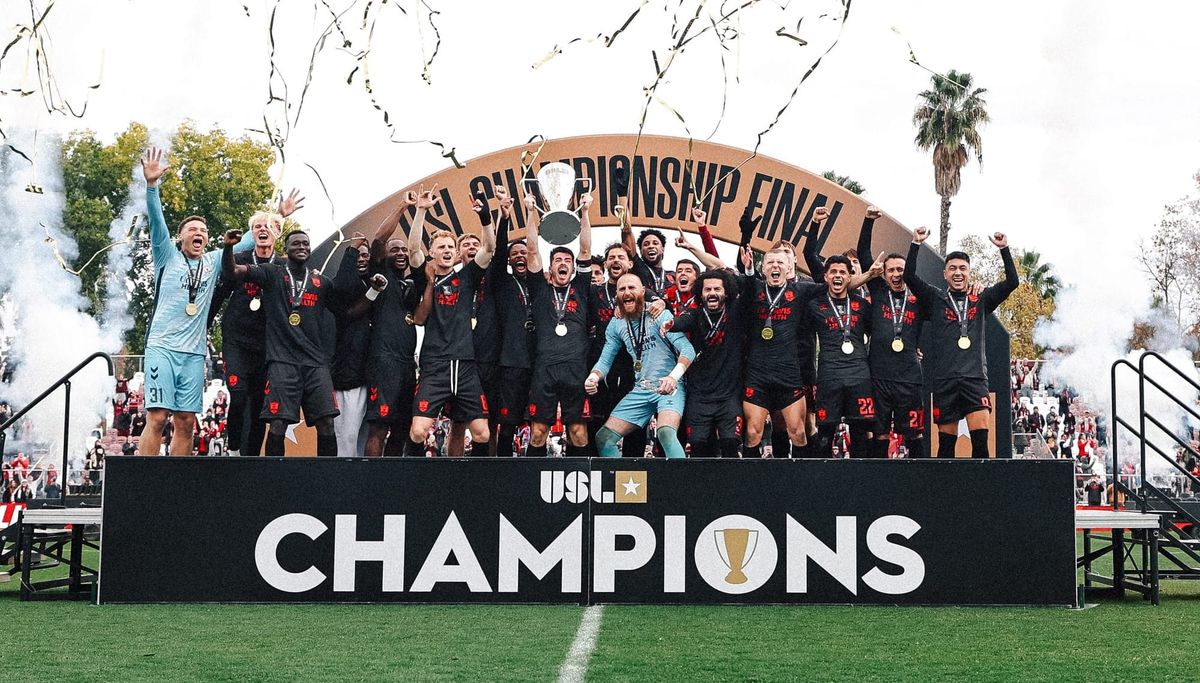
On Saturday, the Sacramento project reached a new high as the Republic claimed their first title in more than a decade.
The final victory over Louisville put all of this club’s strengths on show. The Republic were defensively dominant with rare exception. The scoring was there when it mattered the most. Stellar squad depth proved decisive late-on. Whatever criteria you’re looking for to define a champion, Sacramento brought it to the table.
Time and again, Sacramento – who ended the night with a 65% possession share – set the terms through the central midfield. Without the ball, the shape was a 4-4-2. With it, the Republic flexed into a “three-box-three” look that constantly challenged Louisville up the middle. Out of possession, Pep Casas was a No. 10 and Memo Rodriguez sat off the right wing; in possession, those two could flow with complete freedom in combination with No. 8 Mark-Anthony Kaye, whilst Danny Crisostomo sat in as a stabilizer.
That’s clear above. Initially, Crisostomo possesses in front of the four-man midfield line of LouCity’s 5-4-1. You can see left winger Ray Serrano pointing out the all-important Rodriguez, who usually drew a man mark from central defender Kyle Adams in the title game.
This time, the timing of that coverage is off. Serrano stays home and tries to shadow Rodriguez, but that means he can’t shift wide when underlapping center back Jared Timmer receives – a byproduct of that four-man box midfield successfully narrowing LouCity. Up top, meanwhile, you can see striker Cal Jennings starting to curl a run into the absent space behind an advancing Adams.
Jennings won’t immediately receive, but Sacramento can still use Timmer and fullback Jack Gurr to essentially create a two-on-one against wingback Amadou Dia. The Republic play Gurr in behind, where he’s able to get endline and play a dangerous cross that’s ultimately blocked.
These kinds of patterns were predominant all morning long, and they furnished Jennings with an all-important opening goal in the 14th minute. For the No. 9, that ability to make an impact was a major relief.
“It’s not the year I expected to have – I’ve been all over the place. It was a blessing to go to Japan and even more of a blessing to come back and win a championship with Sacramento. I just knew I had to play my role,” said Jennings in a post-match interview. “It made the transition a bit easier. I’m great friends with Ryan [Spaulding] and Fred [Kleemann], and having the relationship with Neill was helpful. He knew I could produce, he knew I could fit in a lot of different ways. Maybe I only got three goals, but there’s more to come, and I’ll take that when we win a championship.”
Despite the relative dry spell on the score sheet, you could feel that built-in chemistry from the very moment Jennings joined the Republic. While the former Tampa Bay and Charleston star is serviceable in the air, his superpower is marauding in the box and meeting the end of more controlled crosses. When you can get to the endline and cut the ball back to Jennings, you’re doing something right.
That Gurr attempted a whopping 10 crosses on Saturday was a testament to Sacramento’s success in that category. You see that again here. Jennings lurks in the gap between center backs Brandon Dayes and Aiden McFadden – the same gap which he exploited to score in the first place. There’s yet more Timmer-centric build on show, but the variety comes through Rodriguez’s extremely wide positioning.
Since the star creator is asking for a pass at the sideline, Dia is caught between a rock and a hard place relative to his coverage against Gurr. Thus, Gurr – who’s so high and narrow that he might as well be a striker – is able to make a cutting run and become a target over the top.
While Adams cuts out the pass, both Rodriguez and a roving Kaye have pushed up claim the second ball. Suddenly, Gurr can be played behind, where he’s able to hit yet another high-percentage cross from a dangerous position.
Those right-sided patterns dominated the first half of the match; out of halftime, you saw the same thing, with winger Mayele Malango in the spotlight off the left. All throughout the 120 minutes, it was Collins’ ability to refresh his lineup, lock the match down defensively, and make smart changes within his system that powered the Republic.
Between September 27th and the title game, Sacramento didn’t concede a goal later than the 52nd minute in any match. Indeed, the Republic put up a +10 goal difference from the 50th minute onward in their final nine games, playoffs included. That’s an unbelievable number in a high-parity league like the USL Championship – particularly in the late-season grinder where everything is on the line.
Kyle Edwards, the greatest bench scorer in league history, has been discussed as the reason for Sacramento’s late-game success, but the causes go much deeper. Players like versatile fullback Ryan Spaulding – who scored the game-winning penalty in this weekend’s shootout – and do-it-all No. 8 Blake Willey have brought starter-level quality and ceaseless energy throughout the back half of 2026. If this team's identity is inherently focused on control, Spaulding and Willey have been key pieces that’ve brought it to bear at the most important moments.
“In the playoffs I came off the bench a lot, and I had to know what kind of game it was. If we were up, I had to defend well, clear the ball, and do that job. If we were tied or losing, it was my job to try to come on and create.” Willey said to me post-game. “We all fight for each other, and I think we have the deepest squad in the league. Guys off the bench make an impact. Guys who start games do a great job wearing teams down. We’re organized very well.”
You see that conviction here. At the start of this play, LouCity’s back three bends Sacramento’s 4-4-2 slightly out of shape, with right winger Memo Rodriguez beaten by a pass through the channel. It isn’t an issue, and that’s because Willey rotates from the central midfield to address the receiver. The Republic move in concert; Willey fills to the right wing, Freddy Kleemann – another late-game sub – hedges up a step from central defense to cover a diving runner, and Gurr stays home to protect them both.
As Louisville reset, the responsibilities change. The guests are able to work around Rodriguez once again, only Gurr is the player to step this time. Willey smartly takes up a moderate position, not quite rotating to right back while still tightening a potential angle through the channel. He’s aware that LouCity could play a short, centering pass, and he trusts that Kleemann’s fresh legs can do the job behind Gurr.
That trust pays off. LouCity have a runner, but he’s essentially trapped amongst three men. The 4-4-2 is bent, but it’s still entirely stable. In the end, Kleemann is able to slow things down toward the sideline, block a cross, and let Gurr and Willey do the rest to clear their lines.
On Saturday, Sacramento gave up just 0.18 xG in the final 75 minutes of action. LouCity simply didn’t get any clean looks at goal. To a large extent, that denial was a reflection of Collins’ deep understanding of this squad. Just as Jennings benefited from his existing relationship with Collins from their Tampa Bay days, Kleemann and Spaulding – two more former Rowdies – found perfect niches in this team. Those two and Willey totaled four clearances while consistently making the right choices in rotation.
From start to finish, Sacramento’s chemistry was undeniable, reinforcing what’s been true all year: no team in the USL was as immaculately organized as the Republic. Winning in November takes discipline and adaptability in equal measure, and Collins’ managerial abilities brought those traits to fruition. It’s easy to confuse sexy attacking soccer with quality, but this title run for Sacramento was a celebration of the small, subtle things that let a club control a match.
Guys I Like (Eliminated and/or Expansion Edition)
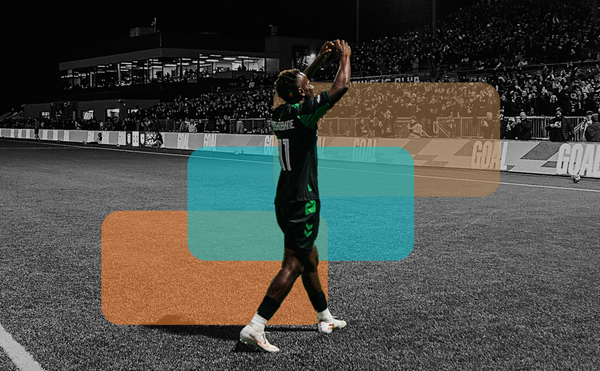
Another week, another check-in with a fascinating player from an eliminated club. This time around, I want to focus on center back Brecc Evans – who, last week, became the first free agent mover of the offseason as he decamped to Cascades FC from Portland Hearts of Pine alongside teammate (and right back) Mo Mohamed.
Evans, 27, broke out at the League One level with Northern Colorado. Across his three seasons with the Hailstorm, the defender established himself as one of the better long passers in the league. More importantly, he showed off a real ability to anchor a mid-block defense. That quality made Evans indispensable in 2025, where he led the way for expansion FC Naples.
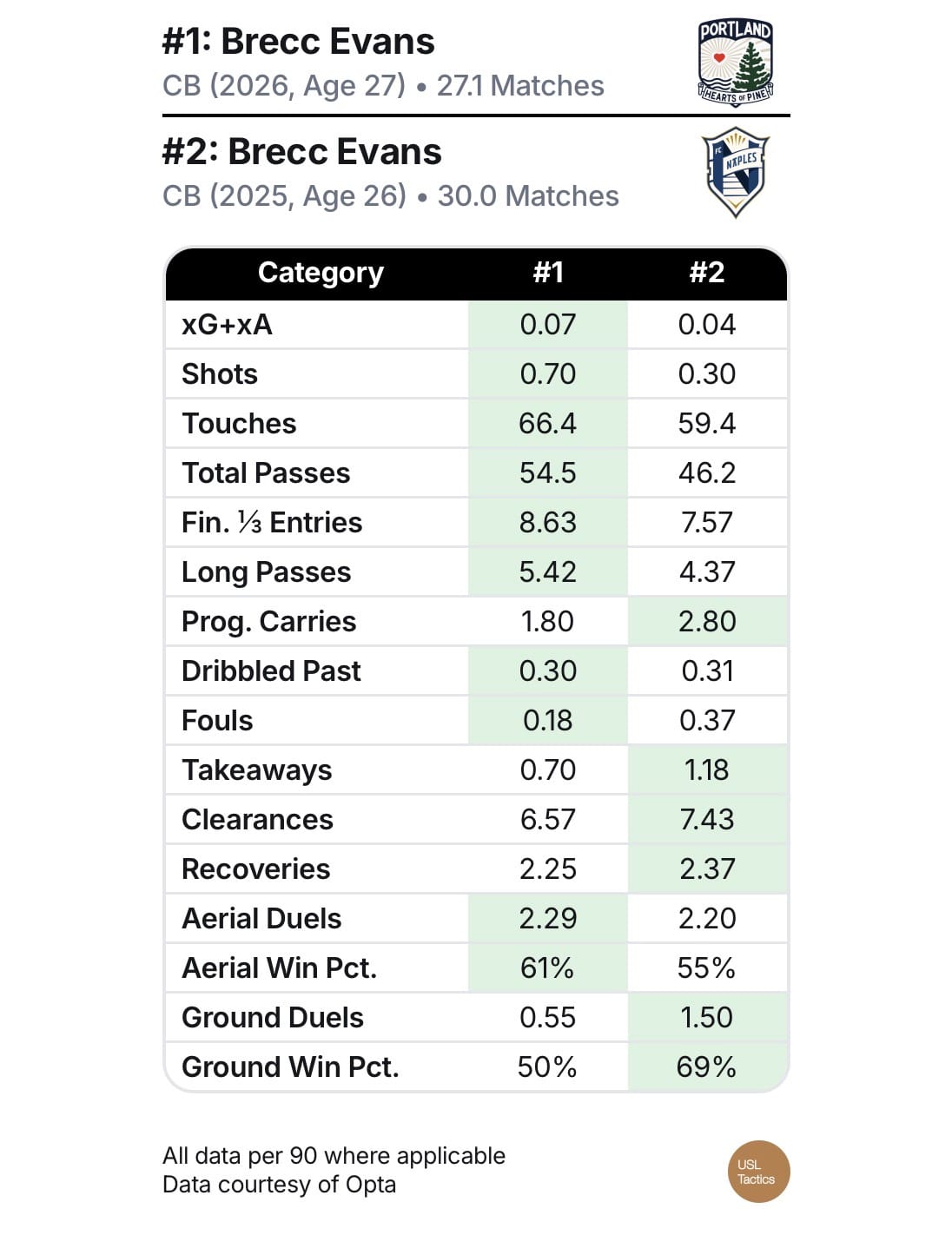
The 2023 Hailstorm ranked last in League One for pressing sequences per match. In 2024, they landed in the bottom third of the league for pressing sequences and high turnovers alike. Naples fit the same bill; their mid-low, four-at-the-back shape put in just 9.4 pressing attempts per game. In other words, Evans was given the opportunity to let the game play out in front of him.
He took that opportunity in stride. In his four seasons prior to the Portland move, Evans won a staggeringly high 65% of his ground duels. Along the way, he only conceded one foul every two matches. While that discipline was still present in Maine, Portland’s on-again, off-again use of a high line and half-hearted commitment to pressure made life difficult for their star defender.
The problems for Hearts in 2026 didn't start with Brecc Evans, but he couldn’t keep a sinking ship afloat. Still, by season’s end, it became clear that the former FC Dallas academy product had grown comfortable in a more aggressive setup – a fact that gives Cascades considerable tactical wiggle room under manager Darren Sawatzky.
Now, do I expected Sawatzky to suddenly become a high line guy? No. Do I think Evans is maximized in that setup? Maybe not! Regardless, it’s the completeness of the defender’s skillset that makes him so good.
Here, for example, you get a taste of Evans’ passing. These clips come from Portland’s final game of the season against a rotated Charlotte side, but they still tell you something about Evans’ courage under fire. In the first clip, for example, the center back is closed at a curling angle twice over. Still, Cascades’ new linchpin doesn’t blink. He’s able to safely recycle play against the first bout of pressure and, after receiving anew, pick out a nice pass through the left channel to push his Hearts side upfield.
The other clips come further ahead up the pitch, where the 27-year-old has advanced to help elevate the line of possession and underpin attack-minded soccer. Between slick first-time passing up a packed sideline, constant motion to remain available as a reset option, and juking first- and second-touch quality, you see why Evans has become a premier table-setter at this level.
Even as his numbers flagged in 2026, Evans still showed flashes of real defensive skill – the kind that made him an all-USL contender with Naples and Northern Colorado. Consider the timing in the first sequence here: Evans steps to corral a showing forward into traffic, but he knows when to hold up and let his midfield take over. There isn’t any panic to recover, either. Evans knows he’s screening a potential lane for a controlled, grounded through ball, and he’s maintaining an offside trap by sticking high.
That composure is a constant for Evans, and it’s bolstered by strong placement on the end of headers and a good ability to read passing plays. While I tend to be of the opinion that Evans is best when he’s paired with a more stay-at-home partner, he’s capable of doing whatever you need amidst your central defensive corps.
In other words, Cascades FC have their cornerstone. How the rest of this roster shakes out will be fascinating to see, but Brecc Evans feels like a major floor-raiser in Oregon.
Super League, Week 15!
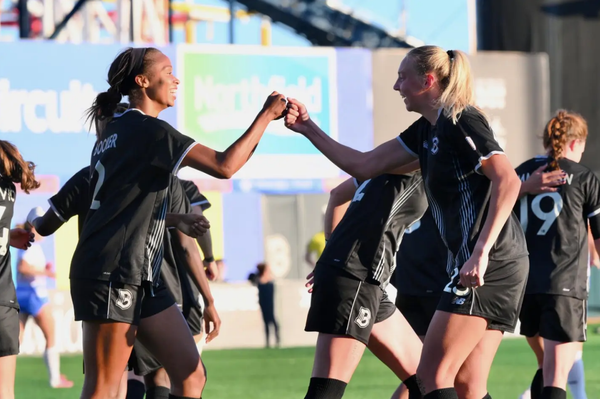
There are five games left in the Super League's regular season, so where do we stand? Saturday's results clarified the playoff race, so let's dig into the action.
Jacksonville (1) - Carolina (0)
When Sporting Jax are at their best, they’re able to build from the back, activate their midfield, and make defenses hot under the collar out of their 3-1-4-2ish attacking shape. It’s the waves of movement that eventually prove overwhelming; when you think you’ve pinned, say, AJ Hennessey at the wingback spot, Jacksonville will push forward Paige Kenton or No. 10 Ashlyn Puerta ahead on a diagonal run and devastate you.
Stacey Balaam’s side entered Week 15 putting up 2.1 goals and 1.9 xG per match for a reason. It takes a uniquely organized defense to stop Jacksonville, and the Carolina Ascent are as strong a unit as they come in the Super League. Saturday afternoon’s match put those dueling styles on show.
Here, you see those dynamics in action. Sporting starts this sequence working from their left to their right through centermost center back Georgia Brown, but this is a rotational moment. Sophie Jones isn’t in her usual holding position at the start of the play, so right-sided No. 8 Sophia Boman drops in to receive from Brown and, simultaneously, fill that spot.
Boman rides out the press, bounce-passing to center back Keeley Dockter. As Dockter hits Hennessey off the right side and advances, there’s a fun bit of interchange in the works. You can see the 3-1-4-2 form back up as Dockter underlaps to, for all intents and purposes, fill Boman’s baseline No. 8 role. Behind the ball, Boman fills in like a central defender, and Jones has been given time to recover at the No. 6 spot.
As Hennessey receives within that framework, she’s able to hit Kenton on the drop, drawing a mark from left back Jill Aguilera along the way. Puerta, meanwhile, sees Aguilera stepping up and slashes behind her.
Most clubs would break against Puerta receiving in the box. Carolina doesn’t. Even as Aguilera is rounded, No. 6 Lily Nabet tracks Puerta’s run and denies a clean shooting angle. A cutback to a trailing Kenton is on, but by then, the Ascent have got support from Mackenzie George (their No. 9!) and Taylor Porter (Nabet’s pivot partner). Those two rush the shot, Reese Tappan and Jenna Butler don’t budge in central defense, and there’s no danger.
The difference-maker on Saturday? Jacksonville made the most from dead balls, and Carolina didn’t. Dockter – who’s been nothing less than excellent since claiming a starting spot – scored from a corner in the 70th minute to win her side the match. It was just the second set piece concession of the year for the Ascent, but it reflected the upside of a Jacksonville side that’s now unbeaten in seven.
Tampa Bay (2) - Brooklyn (0)
No match this weekend had clearer do-or-die stakes than the Tampa Bay Sun’s battle against Brooklyn FC, where a loss for either side would’ve guaranteed playoff elimination. Kelsey Hill – who made more than 50 appearances for Brooklyn before decamping for Florida over the summer – was at the heart of what became a fatal match for her old club.
Hill, 27, previously had a look-in with Angel City in the NWSL, but she’s really emerged as a stalwart at the Super League level. While the defender’s numbers have been fairly pedestrian across her three seasons in the USL, it’s Hill’s ability to read the game, mark opponents, and allow her partner to be aggressive that stands out. The impact isn’t always obvious in the box score, but Hill has provided a consistent presence year after year. On Saturday, her poise at both ends carried the Sun.
Tampa Bay aggressively shifted the striker pair of Shea Connors and Eleanor Dale within their 4-4-2 to stymie Brooklyn’s build game, hedging the forwards against Jennifer Cudjoe as the lone No. 6 in the visitors’ pivot. You see that here, with the Sun responding as Brooklyn initiate from the back. Initially, Connors hews toward defender Sophia Lowenberg, while Dale slips inside to cover the holding mid.
This type of relationship was Tampa Bay’s first read; you can see how they bend when Brooklyn switches the point. Rather than force the No. 9s to walk a tightrope post-pass, the Sun let Dasia Torbert – more of an attacking mid last season with DC, a starting center mid this week – step to mark Cudjoe. As play resets, Connors is, thus, able to hedge toward a potential backpass to goal; meanwhile, Dale is going at the ball as Torbert does the dirty work up the middle.
Brooklyn are trapped wide, and they pass back to Bre Norris in net. When a long ball inevitably ensues, that’s where Hill comes in. Striker Carlee Giammona (a former Sun player for two years) receives off a flick, but Hill deftly corrals her, forcing the guests to completely reset. The press trap can start anew.
Beyond quality defending in that manner, Hill also scored what became the winning goal. After an unsuccessful corner, the Sun quickly took a throw-in (regrettably, not a somersaulting throw from Jordan Zade) to keep numbers high after the initial set piece. With Dale helping to hold play up, Tampa Bay could hit a far-post cross and let Hill finish past an overwhelmed Jilly Shimkin.
The Sun got another insurance goal to seal a cozy win, but it ultimately wasn’t enough. Given other results, this team will miss the playoffs yet again, and while the fall campaign has been an improvement on 2025-2026, it’s worth wondering which pieces – presumably including Hill – will form Tampa Bay’s spine in the full 2027 season.
Dallas (0) - Lexington (2)
Is it silly to say we should be appreciating the reigning Golden Boot winner even more? Probably, but that doesn’t change the fact that Catherine Barry is the best player in the Super League. Her ability to dominate games from the No. 9 spot was at the core of Lexington’s title run last season, and her fit within an adjusted system was on show against Dallas on Saturday.
A few self-reinforcing things were true this weekend: Kosuke Kimura’s aggressive mid-block defense kept a lid on Dallas, scoring early let LSC sit in that mid-block without straining, and that early goal was a result of break bred by defensive aggression. There was something cyclical about the system, and Barry’s ability to connect play over the top was the pièce de résistance.
When Lexington got on the board less than two full minutes in, the play began with right-sided pressure via winger Alyssa Bourgeois and fullback Hannah Johnson against a throw-in. Post-takeaway, the ball cycled back to Johnson, who picked out a pass to Barry as she made a run into the channel. On paper, the No. 9 was in a bad position as she ran away from goal with back-side pressure via center back Meila Brewer and center mid Felicia Knox; in practice, Barry was somehow able to shrug off those defenders, hit a cross, and tee up winger Hannah White for a finish.
All night long, Lexington forced Trinity to spin their tires while maintaining a fearsome Barry-led counter. In the end, Dallas played a season-high 683 passes, yet they put up just 1.1 xG despite chasing a lead for 88 minutes. Lee Nguyen’s side was never given easy access to dangerous spaces. Season-high 683 passes / In their last six games entering Week 15, Dallas had played 127 final-third passes per match, 23% of their total attempts. Against Lexington, that share dropped by a full 5%.
You see why here, as LSC lock down in their 4-4-2. Sideways passes across the back end of Dallas’ pseudo-back three were a regular pressing trigger for Bourgeois and White; here, you see a clean reaction even after Bourgeois is played past. It’s a nice pass from defender Sydney Cheesman that clears the midfield and finds No. 10 Sofia Cedeno, but Lexington doesn’t flinch. Instead, Katie Murray (neon green) slides over from the pivot as White and Darya Rajaee round out the shape behind her.
Murray’s step slows down the ball, allowing her teammates to pinch against a potential centering pass. Rajaee is instantly in position; on the back end, White basically fills in like a left back, thus creating a domino effect. Actual left back Ally Brown can pinch in, and Regan Steigleder can step up to mark No. 9 Seven Castain. There’s no egress. Dallas ultimately play a sideways pass to Knox, but her only option amidst a crowd of defenders is a wanton shot that doesn’t trouble goalkeeper Marz Josephson.
I’m not here to tell you Dallas were at their sharpest, but Lexington played a near-perfect game in terms of controlling Trinity. This match was a major six-pointer in the hunt for a playoff spot, and LSC’s ability to align Catherine Barry – who scored the game-sealing second goal on another pass over the top – within their overarchingly defensive-minded system is what got the job done.
(And to put a cherry on top of the Barry thing: with 0.74 goals and 1.74 chances created per game, Barry’s production has somehow gone up despite Lexington’s relative inconsistency. Her aerial duel win rate is up 13%! Incredible player.)
In other news…
Big fan of the Aodhan Quinn addition for Lexington, which I first reported back on Thursday evening. Quinn was a font of stability during his four years with Indy Eleven, and he gives LSC a wonderful sense of versatility in an already-strong lineup.
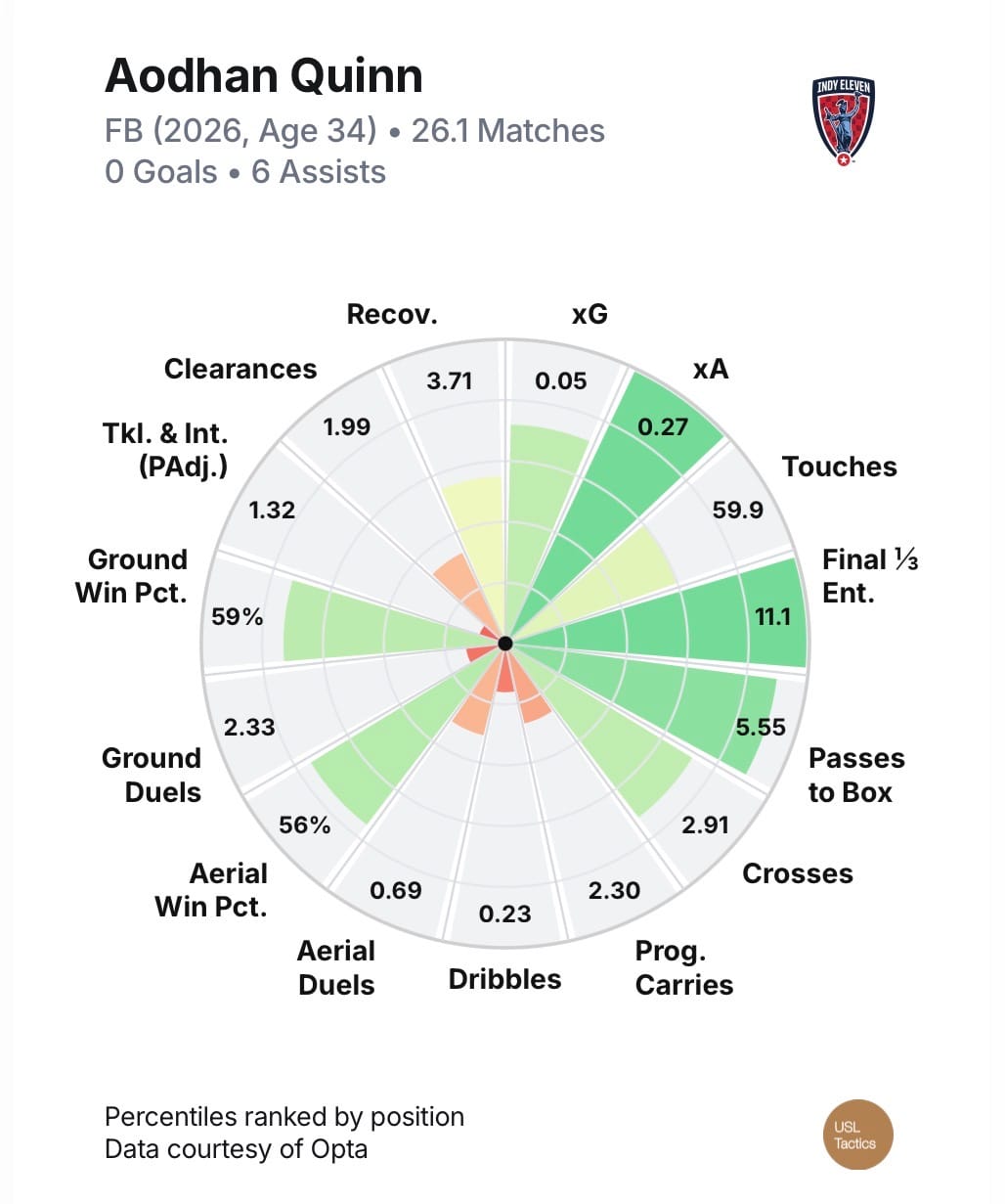
At the end of 2025, Quinn took over the left back spot in Indianapolis, and that position became his go-to for the lion’s share of 2026. We might think of Quinn – the league’s all-time assist leader – as a premier No. 8 first and foremost, but his ability to provide line-breaking passing and halfspace creation as a tucked-in fullback is equally impressive. That fit didn’t always feel right in Indy’s vertical, fast-paced setup, but it’s enticing for a Lexington team that’s far more interested in patient possession.
Shoutout to my Backheeled boss Joe Lowery, who had the news that Forward Madison star Roman Torres would be joining Detroit City. My “points added” player impact modeling had the 24-year-old as a top-ten player in League One, and the eye test bears that out. Torres is a slick play-driver in the open field (5.0 non-cross box passes per 90), an endless font of energy in defensive situations (3.8 takeaways), and a smooth operator around the net (13 goal contributions). If Detroit pairs him with Maxi Rodriguez and Kobe Hernandez-Foster – presuming both are back – it’ll instantly give them the most dynamic, interchange-ready midfield three in the USL this side of Lexington.
At risk of being too navel-gaze-y, I’d like to thank everyone that read the site this year – especially those of you that are paid subscribers to the blog and to Backheeled. I’m not in it for the small amounts of money…but the money is nice in terms of hosting the site (see the data tools!) and getting to places like Sacramento to cover the USL’s biggest moments.
I say it a lot, but this whole "USL Tactics" project is a labor of love. I started out as a guy tweeting about the league back when the website was still called Twitter, and that snowballed into scouting internships, multiple weekly shows, a website, and wonderful chance to write for Backheeled. This isn't my full-time job, but you wouldn't know it given the amount of time I commit to the work.
None of that would be possible without y'all. I'm an introvert by nature, but the USL corner of the world has given me a real sense of community. I'm not always effusive about everything the USL does at macro level, but I firmly believe that expanding the game of soccer also expands the sense of community that I so value to other people. If, in my small way, I'm making that happen, then we're chalking it up as a win.
There are lots of Saturday nights at 1:30 AM when I’m rolling back Monterey tape or stray Wednesdays with five League One matches on deck where that job feels onerous. As any USL media member knows, you feel like you're shouting into the wind when you’re covering this league. Still, times like the final in Sacramento where I get to chat with fans, journalists, players, coaches, and league personnel that follow along are a reminder of why I do all this in the first place.
So, yeah, thanks again!