The Back Four: Super Suber
On Sean Suber, New Mexico, and Richmond

Welcome in to The Back Four!
As always, visit Backheeled for more USL content, including an intro to the 2026 expansion class. Also, check out This League! for an audiovisual dive into the week that was – now coming to you live on Mondays.
Without further ado, let’s get to it.
Sean Suber, zone retention machine
It’s the classic Pittsburgh formula: find an under-appreciated prospect, give him the reins as a starter, and watch him depart for another USL juggernaut two years later. We’ve seen it time and again, and now Sean Suber – the newest member of the Charleston Battery – is repeating the cycle. As we head toward the 2026 season, that's a massive coup for the re-tooled Battery.
Suber was a second-round MLS SuperDraft pick in 2023 but spent his rookie season almost exclusively with Huntsville in MLS Next Pro. The following winter, he decamped for Pittsburgh, and the rest is history. Just 24 years old, Suber quickly developed into one of the USL’s best center backs and ultimately made 75 appearances across all competitions for the Riverhounds.
In his first season at Highmark Stadium, Suber mostly played on the right side of a back three. In 2025, he held down the center of what became the Championship’s best defensive line, playing every single one of 3,420 available USL minutes. In the process, the 6’1” defender earned an all-league nod and led Pittsburgh to their first-ever title.
Suber’s numbers are immense. He led his position group with 192 long completions last year, ranking as an 80th percentile overall passer with 56 attempts per 90. Defensively, Suber won 62% of his duels, including 66% of his aerial challenges. While serving as a safety net at the back end of Pittsburgh’s territorial 3-4-3, he still managed to produce 68th percentile defensive actions.
Suber is set apart by a preternatural sense for defensive timing. He knows exactly how to intervene when (1) a challenge is likeliest to succeed and (2) most impactful for his side. For any club that wants to tilt the pitch without conceding space for opposing counterattacks, you can’t find a better table-setter than Sean Suber.
When you think about the Charleston system under Ben Pirmann, there are a few concepts that immediately spring to mind. They’re probably going to run a 4-2-3-1 or thereabouts with an emphasis on patient build. Charleston held nearly 60% of the ball in 2025, and that philosophical end won’t change in 2026.
What Suber adds is a new flavor on the edge of the attacking zone. When you think about an average “long pass,” you probably imagine a center back lumping it from within his own 18-yard box. Suber isn’t immune from making that sort of pass, but he also does what you’re seeing above: pick out teammates against compact defenses to instantly gain yardage. Above, he’s hitting a wingback in the attacking zone, ultimately helping to earn a dangerous throw-in.
Suber is generally quite good with the ball at his feet. He’s hard to addle when receiving under pressure, and he’s got a decent first-time ball on either foot if there are short options available. As seen in the clip, he’s good about buying himself an extra yard or two with small but important hop-steps away from defenses.
In their own right, those skills make Suber a natural fit in the Lowcountry. Still, they’re bolstered by the defensive chops that made the 24-year-old an all-leaguer.
Suber won’t be credited with a defensive action here, but the play is emblematic of his impact. In this example, opposing Detroit is trying to build through the high press, and they drop one of the forwards in their 3-5-2 low to present a mid-length outlet. However, Suber matches that No. 9 step for step, forcing a bobbled touch that denies progression.
Plenty of defenders are happy to step high like that, but few are as considerate in the act as Suber. The ex-Riverhound conceded 0.42 fouls per tackle attempt last year, trailing only two other USL center backs. Indeed, Suber was only responsible for 11 fouls and one yellow card all year long – a remarkable record for someone that didn’t miss a minute.
That mix of intelligence, efficiency, and territorial understanding should fit the Battery like a glove. For a team that lives in the attacking half, Suber is a premier base to build upon. No matter whether he’s paired with Joey Akpunonu (one of the breakout players of 2025) or Graham Smith (just inked to a multi-year extension), Suber will immediately make Charleston that much more coherent from back to front.
When you’re as good as the Battery, improvement is necessarily marginal. You might look at what’s essentially a Suber-for-Leland Archer swap and assume that it’s fairly even in terms of raw ability. I’m not here to dispute that point, but I am arguing that Suber is one of the best possible fits for Charleston’s style, particularly given the tactical direction the USL headed in 2025.
Indeed, this version of the Battery looks more like Pirmann's 2022 Memphis unit – a team that allowed just 7.5 passes per defensive action but finished a below-par 350 completions per game – than anything we've seen at Patriots Point. In the current Championship environment, that's not a bad thing, and the addition of Sean Suber cements Charleston's continuing status as a contender in 2026.
New Mexico’s machinations
For two years running, Dennis Sanchez’s teams have been on the doorstep of greatness. His 2024 Las Vegas Lights reached the Western Conference Final, only to concede a first-half goal in Colorado Springs and fail to convert on an utterly dominant 83% field tilt. A year later, his similarly doctrinaire New Mexico team tried to play their game on the road in Tulsa and got absolutely eviscerated.
Those two matches – one in which extreme possessive control didn’t pay off; another where it failed to come to fruition at all – are extreme examples of what Sanchez ball can be. Still, they combine to support a single point: there must be more moderation for New Mexico in 2026. Based on what we’ve seen from United this winter, the club has taken that lesson in stride. So far, Sanchez and sporting director Itamar Keinan have done three main things:
- Add speed on the wings
- Maintain (or improve!) their progressivity from the back
- Keep a consistent spine with cultural familiarity in the New Mexico framework
Start up top. At their best toward the end of last season, New Mexico found a new balance within their attacking system. An average vertical passing distance of 5.1 yards in United’s first 15 matches jumped to 5.8; a rate of 4.8 passes per possession dropped to 4.4. Both of those second-half marks were still high-end outliers relative to the rest of the USL, but they evidence how Sanchez tried to add longer passes and more of a “big play” sensibility to the mix.
Niall Reid-Stephen, who put up 20 goal contributions for South Georgia Tormenta last season, is designed for that adjusted approach. The forward put up 0.50 xG+xA and 1.2 successful dribbles per 90. Reid-Stephen excelled in transition, ranking third in League One with 2.9 expected contributions on the break. Put Reid-Stephen on one wing, Dayonn Harris on the other, and Valentin Noel between them, and you’re in for a good time.
We can trust United’s attack to grow sharper and more varied in 2025, but it’ll look fairly familiar in its totality. The defense is a different story: Talen Maples was sold, Kalen Ryden retired, but both Maliek Howell and Kipp Keller are back under Sanchez’s purview.
I don’t want to be flippant about Maples, who’s obviously a terrific player; I covered him in hushed tones last week. Still, it’s telling that New Mexico confidently shunted Maples to right back during the playoffs. You can interpret that in two ways, and they both contain some truth: (1) using a natural center back as a deep-seated fullback helped create spacing up the wing and (2) United trusted their non-Maples defenders to recreate his impact in central defense. If those things were true during the most important moments of 2025, then of course New Mexico was happy to move Maples for a fee.
We’ll almost certainly see Howell start to the left of Keller come opening day, and it’s a combination to trust. Keller actually put up shockingly similar numbers to Maples. After debuting in August, the ex-Minnesota United man put up 77 touches and 5.4 final-third entries per 90; Maples was at 78 touches and 6.5 final-third entries per 90 during that same time period.
Howell, in his own right, is the kind of defender that excels when he’s sitting 40 yards outside of his box, aggressively maintaining the bottom-end geography of the attacking zone. The Jamaican international was dribbled past just six times in 29 appearances with Las Vegas in 2024, even in the context of the Lights’ field-tilting possession game. In lower-block lineups in 2025, Howell was beaten just as many times in only 14 starts. Meanwhile, his aerial duel win percentage (-6.2%) fell and foul rate (0.22 fouls per duel win, up from 0.15) increased.
Keller provided a fair approximation of Maples’ usage profile, and that’s before you gave him a full preseason to integrate. Howell was a borderline all-USL presence within the Sanchez system. They both have superior progressive tendencies. Keller’s average pass last year traveled 7.2 yards upfield – 41% further than Maples'. In 2024, Howell hit 8% of his passes into the final third on an 85% completion rate, whilst Maples sat on a comparable 10% share with a far worse 63% completion rate.
In other words, United has done the three things I outlined above. They'll be sharper in transition, and they've added quality center backs proven in the Sanchez system. In this league, there’s always a balance to strike between much-needed consistency and the need to adapt. With a 58% minutes retention rate, New Mexico has kept enough familiar faces around to stay steady, yet they've picked up paradigm-shifting profiles in key spots. For my money, that’s a recipe for success.
Richmond’s reset
Following a season where they finished with a -13 expected goal difference and conceded the third most goals (53) in League One, the Richmond Kickers are moving in a way you might expect. A handful of attacking midfield pick-ups stand out, but the scope of Richmond’s defensive reset is what's truly remarkable.
This offseason, the Kickers returned three members of their back end, and all three are products of the Richmond academy. Goalkeeper James Sneddon, center back Griffin Garnett, and left back Beckett Howell have their uses at the League One level, but they were only responsible for 38% of their back four's 13,500 available minutes in 2025.
In other words, this defensive line will be unrecognizable – but what should we expect out of the new faces?
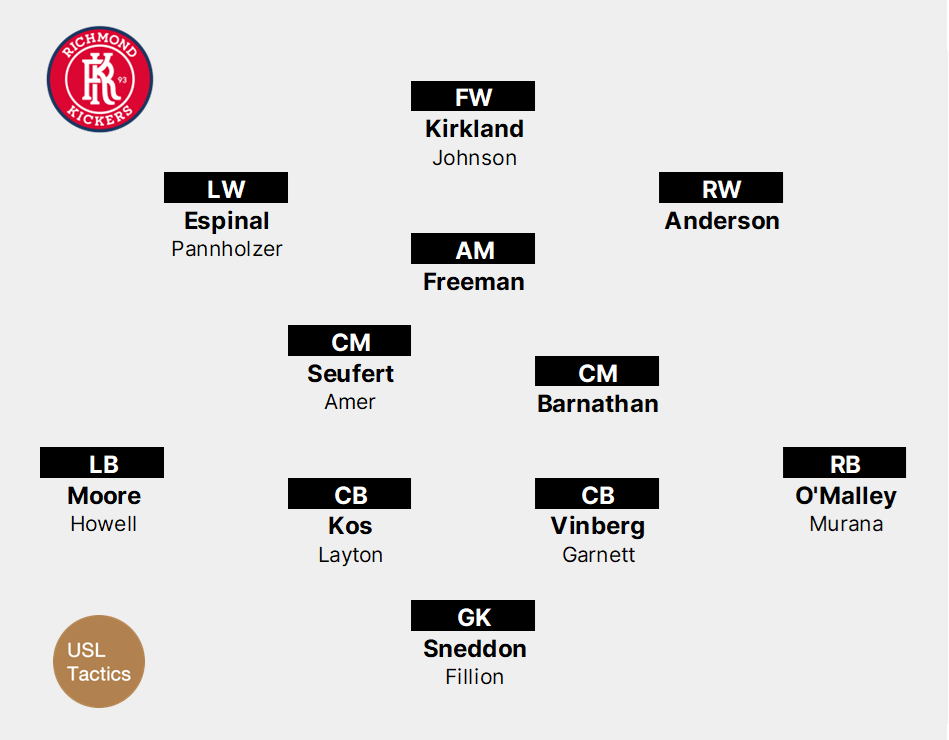
Sean Vinberg will be the most familiar name to League One fans, particularly after a season where he played 32 out of 32 possible league and playoff matches for Portland. Vinberg walked the tightrope in a vertical, pressureful system that encouraged a rapid pace of play; his 62% ground duel win percentage is a significant upgrade over right-sided Marcelo Lage’s 54% clip in Virginia, particularly when you consider that tactical context. Moreover, the 6’1” Vinberg is versatile enough to cover right back in a pinch.
If the ex-Heart feels like a nailed-on improvement, the rest of this back line is a question mark – and I don’t mean that disparagingly. Ethan Kos is a strong left-footer that matches Vinberg’s center back-to-fullback range, though he couldn’t buy a game in Birmingham last year. Sam Layton, meanwhile, played as a No. 6 and center backs in the Australian lower leagues. Toss in Garnett – who I like, despite his truly dire career 44% aerial win rate and surprisingly marginal improvements as a passer as he nears 20 years old – and you’ve got the recipe for a perfectly serviceable spine.
Richmond has been defined by aggressive fullback play under Darren Sawatzky, and that shouldn't change next season. For my money, it'll be former Crown Legacy standout Daniel Moore on the left and reigning USL League Two champ Owen O'Malley on the right, though that's also open for debate.
In college as a Charlotte 49er, Moore was wonderfully dynamic. He ranked in the 90th percentile for progressive runs and the 75th for final-third passing, turning that into a perfectly solid 0.21 xG+xA per 90 in MLS Next Pro. O'Malley, meanwhile, has about 1,000 minutes of Next Pro tenure to his name between Tacoma and St. Louis, one-upping Moore with 0.34 xG+xA per 90. American Soccer Analysis' g+ model ranked him as a plus interrupter and passer to boot.
There's a chance Mujeeb Murana starts on the right, but he's a more physical, staid option. Splitting time between Birmingham and Miami in 2024 at the Championship level, he put up just 0.07 xG+xA per 90. I like his 6'2" profile as an elbow option in a system where Richmond shift leftward into a possessive 3-2-4-1, but O'Malley is the better pick if Sawatzky wants side-to-side balance.
So, what’s the story overall? Richmond isn't changing the broad profile of their defense. The center backs still need to have decent lateral speed and ball skills; the fullbacks still need to offer progressivity. Still, things might look similar on paper, but this defensive line’s average age has dropped from 26 to 23. That matters.
The Kickers have become younger, more agile, and better able to meet the demands of an ever-changing League One. We know Darwin Espinal and Nils Seufert will get theirs, and Dakota Barnathan (6.2 defensive actions per 90) is a properly protective No. 6. Now, they've hopefully got the defensive unit that can bring it together at City Stadium.
Quick Hits
In other news this week…
- I changed formations into a back three this week because I'm going "oops, all end notes" mode.
- Good stuff from Nicholas Murray and my friends at Seriously Loco on Junior Gonzalez in El Paso.
- Love the addition of Regan Steigleder for Lexington over in the Super League. A natural left back, Steigleder put up a sizzling 2.2 successful dribbles per 90 in more than 2,300 minutes in the Danish first tier in 2023, adding about three clearances per match at the other end. A move to the NWSL didn’t prove fruitful, but the 27-year-old could be a real get in Kentucky.
- Elsewhere in the Super League, weird times for Dallas! The end of Tamara’s loan is the biggest deal; she’s got three assists while posting 0.44 xG+xA and nearly five dribble attempts per 90. Rhea Moore is another loss as she starts college at USC. Meanwhile, goalkeeper Rylee Foster’s mutual termination might be addition by subtraction given her -1.3 goals prevented mark. I know Lexi Missimo getting fit changes the calculus at the Cotton Bowl, but I’m curious how things shape up for Trinity in the second half.
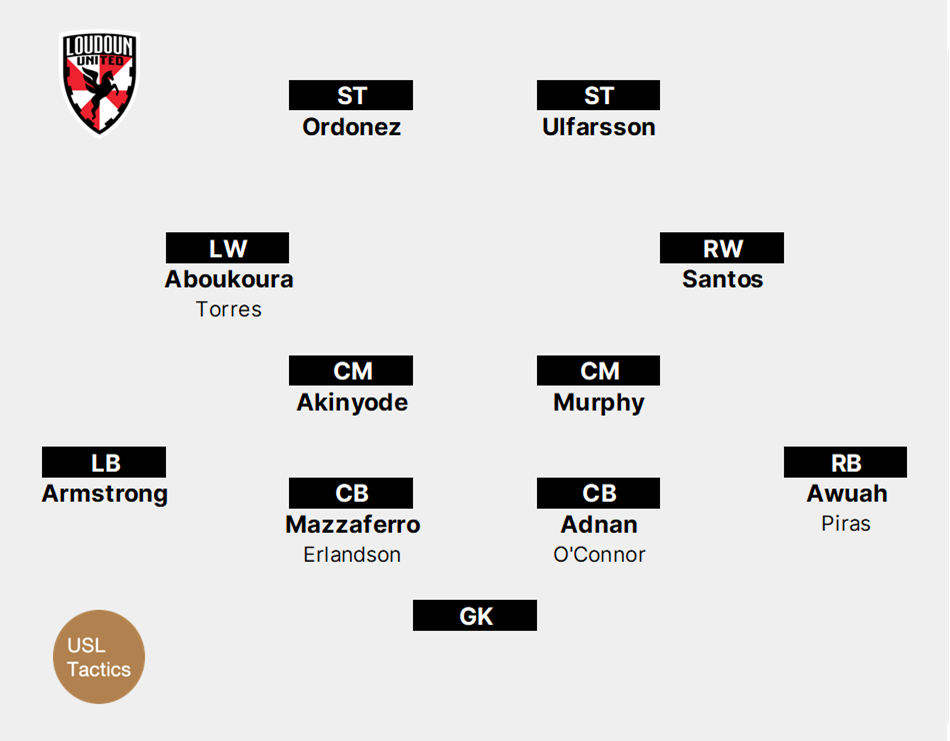
- Loudoun’s doing things, and there's a lot to like. Sal Mazzaferro is a terrific defender; Thor Ulfarsson could be an elite No. 9. My eyebrow is raised relative to Ezra Armstrong, who pairs with Kwame Awuah to give new manager Anthony Limbrick two left backs with all-USL potential. Limbrick’s got choices: (1) play Armstrong as a winger and move Abdellatif Aboukoura to the No. 10 spot, (2) play Awuah at right back, or (3) bench one of 'em. Improvement throughout the spine (I remain a big James Murphy fan!) should give Loudoun plenty of time to figure it out.
- Alex Sutton looks to be Sarasota's starting goalkeeper after signing from Carolina Core, and it's a very good move. American Soccer Analysis' g+ numbers ranked him as the second-best passer among starting Next Pro netminders last year because of a high volume (see an 8% touch share) and varied profile (more than 25 yards per pass despite a workload you’d expect from a short passer). Meanwhile, Sutton posted a perfectly solid 0.01 goals prevented and was a trustworthy shot-stopper.
- One Knox needed somebody to replace Stuart Ritchie, so they signed three left backs this week. That’s an uncharitable read, but it’s not entirely untrue. I liked Finn McRobb as a wingback in Indy, but his 6’3” frame could provide a Sivert Haugli-esque conversion option in central defense. Donovan Williams is exciting coming out of Ohio State, but 0.03 xA and 0.8 box completions per 90 are distinctly un-Ritchie. Taiwanese international Chris Tiao is the most overtly end-to-end member of the trio…and he put up 0.46 shot attempts and 0.13 xG+xA per game in Next Pro. Things are gonna look different!
- At the risk of being a tease, I’m very excited for the year of coverage that’s on the way at Backheeled. Fans of USL League One should feel the same…
- 28 Years Later: The Bone Temple is a blast, especially if you’re into gory and demented kills. (Or into extended Ralph Fiennes dance scenes set to Duran Duran?) It’s also a genuinely terrific extension of screenwriter Alex Garland’s project that began with 2024’s Civil War. Back then, Civil War drew criticism from the worst people on the Internet for refusing to do a didactic, lowest-common-denominator “right wing dictator bad!” thing, as if that wasn’t self-evident. Instead, it was a reflection on an American obsession with violent spectacle, the media’s complicity in that obsession, and the way those trends polarize politics and separate them from a basis in fact. Two years on, The Bone Temple explores the logical end to that idea: a post-apocalyptic landscape where the only ideology – shared by human zealots and inhuman zombies alike – is the violence fueled by reality-altering psychoses. Here, though, Garland’s script is ultimately hopeful, centered around an endlessly empathetic Fiennes whose performance suggests the importance of human connection. The Bone Temple is worth the price of admission for the action sequences alone, but it’s ultimately going to be one of 2026’s most resonant texts.