The Back Four: Giuseppe Rossi, in conversation
On the Cosmos' revival, plus the return of the Super League

Welcome in to The Back Four!
As always, visit Backheeled for more USL content, including a look at scouting across the league. Also, check out This League! for an audiovisual dive into the offseason. Last week, we did a live power ranking of all 25 teams in the Championship.
Without further ado, let’s get to it.
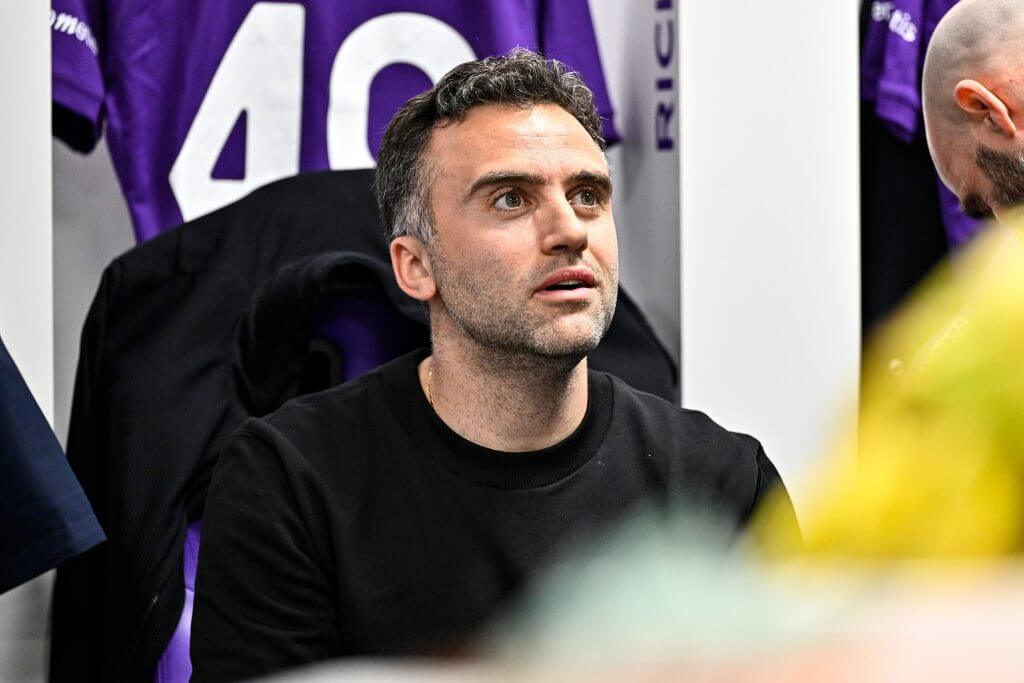
In Conversation: Giuseppe Rossi, New York Cosmos
Before Giuseppe Rossi debuted for Manchester United, starred for the Italian national team, or scored more than 100 career goals, he played his high school soccer just 10 minutes away from Hinchcliffe Stadium – where the revived New York Cosmos are set to debut as part of USL League One in March. Rossi is the Head of Soccer for the revived Cosmos, and now he's trying to grow the game back where it all began.
“It's an honor to be part of a team that has such a rich history,” said Rossi. “People from my family – my father and my grandfather – talked about the Cosmos, and how they went to go see them play in the '70s and '80s. Now, being able to be part of this family right now, we're trying to build something special.”
Still, these aren’t the Cosmos of old in one important sense: they’ve made sustainability a core tenant and are focusing on making deep inroads into the youth scene.
That outreach has taken on multiple forms already. This organization is thinking out of the box; starting a “Cosmos Chess Club” can bring new, less soccer-centric fans into the fold. More pertinently, a partnership with Morris Elite Soccer Club instantly links the Cosmos into the New Jersey developmental pipeline, as does the creation of local high school affiliations.
“We've been creating a lot of relationships with teams from around the area in the Tri-State. There is a lot of talent in this area, and the more players we're able to attract, the more we're able to help these kids' dreams come true,” explained Rossi. “A USL League One team should never be the final stage of somebody's career. This should be a stepping stone, and we hope to give these kids everything we have when it comes to a knowledge base and a platform to showcase their talent.”
Rossi and the club chose Davide Corti as the coach that could help make it happen. Corti, a 53-year-old Milan native, had only managed in Italy before coming to the Cosmos. Most of his experience has come in the women’s game; Corti split the 2023 and 2024 seasons helming AC Milan and Sampdoria in Serie A Femminile.
That experience exposed Corti to the full range of resources available in professional soccer. At Milan, his side hovered toward the top of the table and dominated matches with large shares of possession. His Sampdoria team was far punchier, often keeping less than 30% of the ball. Still, it’s Corti’s developmental nous – see 12 years as a scout and youth director in Milan – that endeared him to the Cosmos.
“He understands the way to develop young kids. His resume speaks for itself,” attested Rossi. “We understood right away that he was the right man for the job – for his character, for his integrity, and the way that he's eager to be part of this family. Having seen him work, the kids are very lucky to have him.”
Entering 2026, the Cosmos have built a young side by design. There are some veterans – see longtime USL striker Sebastian Guenzatti, a former Cosmos star in the NASL – but they’re an exception to the rule.
As it stands, Guenzatti is the club’s only player over the age of 27. The median age is 23. By any standard, this will be one of the youngest independent teams in the history of League One. Still, that doesn’t change the Cosmos’ competitive outlook.
“It's important to build a winning culture because we have to respect the history of the Cosmos. That was built on victories and lifting trophies. But it's also important for us to concentrate on building talent,” he said. “We're trying to find the next big talents in America, hopefully here in our backyard. There is a fine line, and you have to have a good balance.”
Rossi demurred on his and Corti’s specific tactical vision, but he expressed a desire to dominate games, control the ball, and entertain fans. If you look at the names New York will deploy on their team sheet, that latter goal is undeniably within reach.
Some tape here on Julien Lacher, the 18-year-old winger the Cosmos signed off of NYCFC II. Lacher put up six goals and seven assists in Next Pro last season and really seems to be a coup of a signing.
— John Morrissey (@usltactics.com) 2026-01-01T21:07:38.185Z
Christian Koffi, Ajmeer Spengler, and Julian Lacher – the Cosmos’ putative attacking midfield group – combined for 43 goal contributions across MLS Next Pro and USL League One in 2025. Lacher, who’s just 18 years old, did so with NYCFC II. Spengler and Koffi aren’t as linked to the New York metro, but they’re both 25 years old and have room to grow with the Cosmos.
“They’re players who are able to entertain, but they’re also able to put us in good positions when we're on the field,” Rossi explained. “Once you're able to get past one defender, the entire landscape changes on the soccer field. You need players like this that are able to break the lines, that are able to create a little bit of mayhem when it comes to the attack. Imagination is something that they all bring.”
From afar, it’s easy to envision this Cosmos team lighting up the scoreboard. How this unit translates as a whole in their expansion season is a bigger question, but Rossi is confident in the vision.
Still, you can’t judge a club’s success by their first year alone. The New York Cosmos have a long history, and the goal for Giuseppe Rossi and the rest of this front office is to leverage the early goodwill, make lasting headway in the community, and create something that'll matter years and years from now.
“Success can be word-of-mouth, I think. It’s having fans talk about the Cosmos, getting positive feedback when fans come to the field, going around and having people recognize the badge that's on your jacket,” Rossi said. “That is a measure of success, not only the winning and the titles. Both things have to happen in order for it to be called a success.”
The Super League’s winter additions
Saturday marked the return of the Super League after a month-and-a-half off, and that provided the opportunity for more than 20 new players signed over the winter break to (potentially) make their mark. Who stood out, and what did we learn?
Dallas was the most changed team of all, and new manager Nathan Thackeray rolled out three just-signed starters in his 4-1-2-3 to celebrate the occasion. Lauren Flynn, in on a permanent deal after a stint with the Utah Royals, got the nod at right back. Washington Spirit loanee Heather Stainbrook served as the right-sided No. 8 in front of Flynn. Lastly, Tyler McCamey debuted in goal after a few cups of coffee (but no actual starts) in the NWSL.
Their challenge was to overcome a stingy Brooklyn FC’s 5-1-2-2 defensive press, which applied tight one-on-one marking against the Dallas pivot. Likewise, the visitors’ two forwards (Rebecca Cooke and Catherine Zimmerman) readily harangued Dallas’ center backs as they strove for shorter-oriented build.
Thackeray saw that coming, and he trusted McCamey with a heavy possessive onus in her first-ever Super League start. Dallas tended to restart long, but they wanted McCamey to get involved on the ball. Their possessive shape was effectively a 3-4-1-3 in which McCamey became a proxy outfield player, thus allowing the fullbacks to hinge higher.
That formula didn’t always bear fruit. As seen above, Brooklyn let their No. 8s climb the ladder against the ball, jumping lines after forcing a backpass. Jessica Garziano (right-sided No. 8, in grey) does so above, flying at McCamey once Dallas turns backwards.
McCamey doesn’t hit here, but she connected on 13 of a whopping 25 long passes on the night. "Long" can be misleading; 22 of those passes ended in Dallas' own half, picking out sideline pockets on either side of Brooklyn’s man-oriented spine. McCamey completed 41 passes in total, another way in which she represented a major change as compared to Rylee Foster, the typical starter in the fall. Foster ranked last in the Super League with a 27% completion rate on 33 completions per game before her release.
In the clip, McCamey's pass falls incomplete, but another new presence – Stainbrook – is there to make up the difference. She collapses to the ball, contests multiple duels, and then starts to backtrack to help restore Dallas' 4-2-1-3 structure. In sum, McCamey went 7/8 on ground duels and led all outfield players with 13 recoveries.
That import carried over into possession, where Stainbrook and partner Wayny Balata spearheaded Dallas’ best progressive moves. McCamey’s lofted passes towards the 5-1-2-2’s wide gaps didn’t always catch Brooklyn out, but if the pivot could withstand pressure and then spring wide, good things happened. The first Trinity shot-creating sequence featured a Stainbrook recovery and a lay-off into Balata to tee up a wide break; their first goal saw Stainbrook cut out the middleman and claim the go-ahead assist.
I want to be clear: Brooklyn controlled this game. They put up 1.8 xG, and Dallas generated just 0.2. Tomas Tengarrinha's press never gave Trinity any quarter. Still, a draw is a draw, and it's clear that the best version of Dallas will spotlight Stainbrook as a do-it-all anchor of a No. 8.
Elsewhere, Jacksonville and Carolina each debuted a winter signing, though I’d argue the more impactful debutante was on the losing side. For their part, Sporting rolled out Kasey Smekrud – a two-sport college star who had a brief foray in Europe – as their right wingback to (hopefully) provide side-to-side parity in a lineup that’s often leaned leftward. The Ascent pushed the issue by starting Lily Nabet, whose presence in the pivot of Carolina’s 4-4-2 made it far harder than usual for Jacksonville to engage through their left halfspace.
Smekrud’s boldest contributions tended to come in build-out, where she deftly positioned herself to receive in pockets toward the sideline. If Carolina committed a winger forward into 4-2-4ish mode, Smekrud could receive between lines and create an immediate overload against the opposing fullback. While the former Clemson standout struggled to time her through balls into forwards like Paige Kenton, chemistry development was visible throughout the match.
(Of note: Smekrud came off just before the 60th minute for another new face, Maggie Illig. Her entrance at center back shifted Julia Lester up the right side, which gives Stacey Balaam a nice bit of flexibility going forward.)
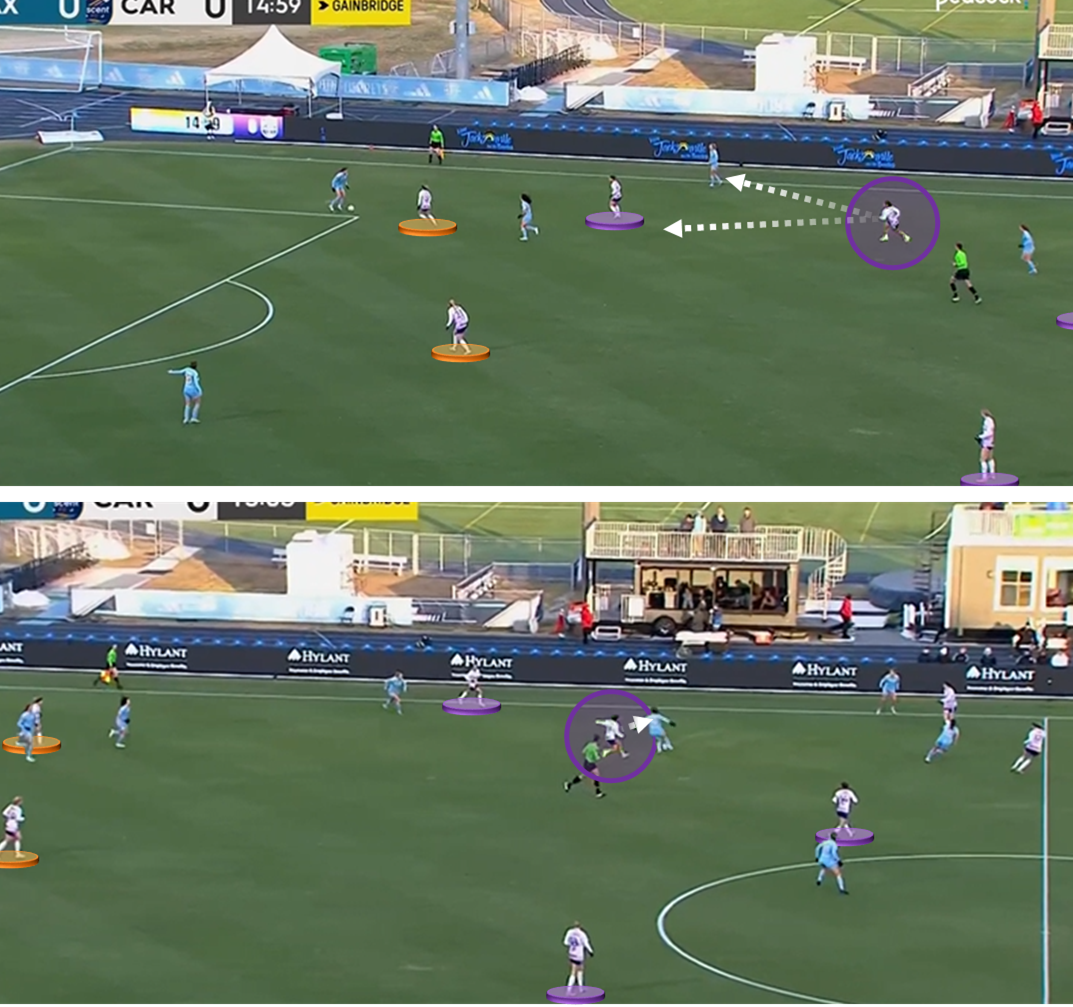
Nabet, meanwhile, spent the first half of the season on loan with Fort Lauderdale before making a winter change. In Florida, she put up a stellar 8.4 duel wins per 90, and that same sensibility shone this weekend. Nabet did extremely well to mark Grace Phillpotts’ trademark underlaps out of Jacksonville’s back three, and her agility in tight spaces helped to deny access between the lines.
That presence embodied Carolina's hard-nosed mien, but it didn't let them hold on for a victory. That same issue recurred for Tampa Bay, who entered the weekend in last place and rolled out two new starters but couldn’t earn three points.
In Tampa Bay’s goal, Houston Dash loanee Liz Beardsley took over for Sydney Schneider (-7.2 goals prevented, last in the USL), and former Auburn standout Taylor Chism debuted at right back. Another new face – forward Faith Webber – came off the bench after having joined the Sun in a loan-for-loan swap that saw forward Natasha Flint head to the Denver Summit.
Flint was critical in Tampa Bay’s title run but had only scored one goal this season, and that’s despite maintaining strong shot (3.4 per 90) and xG (.35 per 90) numbers season-over-season. She’s an elite hold-up No. 9, but something wasn’t clicking. That’s broadly true of this Sun team, hence why Beardsley and Chism were the latest additions to a roster that was already under reconstruction starting in December.
Beyond the new defenders, Saturday represented striker Madi Parsons’ third start in Sun colors. Left winger Jordan Fusco was only in the lineup for the second time. With all those new faces in tow, Denise Schilte-Brown didn’t get away from her typical 4-2-4ish look, and there was genuine upside on display. Fusco (6/7 in duels) was a dynamo in transition and fearless in the counterpressing phase; Parsons provided a real box presence. When Tampa Bay equalized in the second half, Webber was the player to receive between the lines and loose Sydny Nasello with a progressive pass into the attacking zone.
The run from Emma Jaskaniec to occupy the center backs and free Silano is *chef's kiss*
— John Morrissey (@usltactics.com) 2026-02-01T00:59:56.183Z
At the back, however, Tampa Bay still proved fitful. Beardsley started confidently but couldn’t meet a glancing 15th minute header that let visiting Spokane go up 1-0. That play began with Zephyr winning a 50/50 through the middle, exploiting the Sun’s 4-2-4 at its weakest point. From there, Chism was isolated on the right, unable to stop a decisive cross from entering the box.
Now, Tampa Bay generally did well to control the run of play. When Fusco and Nasello narrowed into 4-2-2-2 mode, the Sun's trademark verticality let them tilt the pitch with a real sense of big-play spark. When push came to shove, however, visiting Spokane was generally more clinical in the attacking third.
Zephyr manager Nicole Lukic deserves credit for trusting the process. Her club didn’t blink this winter, and the hard-won chemistry that got them out of a November funk carried over this weekend. Attackers like Emma Jaskaniec, Leah Silano, and Cameron Tucker have preternatural move-and-replace chemistry atop the 4-2-3-1, and it let them spend 30 minutes in the lead.
I’ve elided the most dominant performance of the weekend, in which a Lexington team with 10 returning starters ran rampant over Fort Lauderdale. In some sense, the way in which unchanged teams owned the weekend shouldn’t be a shock; you’re only going to make big moves if you need help! Players like Nabet and Stainbrook look like game-changers, but there’s something to be said for the continuity that powered Brooklyn, Spokane, and Lexington to strong Saturday performances.
The case for Miami FC
For a third straight year, Miami FC is an enigma. A historically bad 2024 season under Antonio Nocerino gave way to a better-but-not-great 2025, and manager Gaston Maddoni has the chance to keep the progress going after another complete overhaul entering 2026.
Only three players, including defenders Daltyn Knutson and Tulu, are back. Everyone else – including stars like Francisco Bonfiglio and Sebastian Blanco that headlined an Argentine-tinged roster – is gone. Still, there are lessons to learn about the way Maddoni wants to play amidst the personnel turnover.
Miami mostly used a back four last year, but they’d often keep their fullbacks low and experimented with a 3-4-3 late on. Maddoni’s side advanced play by 8.0 yards per pass, sixth-most in the USL, yet still managed to keep 49% of the ball. They ranked roughly at par for PPDA and final-third regains, typically focusing their aggression closer to the midfield line. In broad strokes, that vertical but structured template should recur.
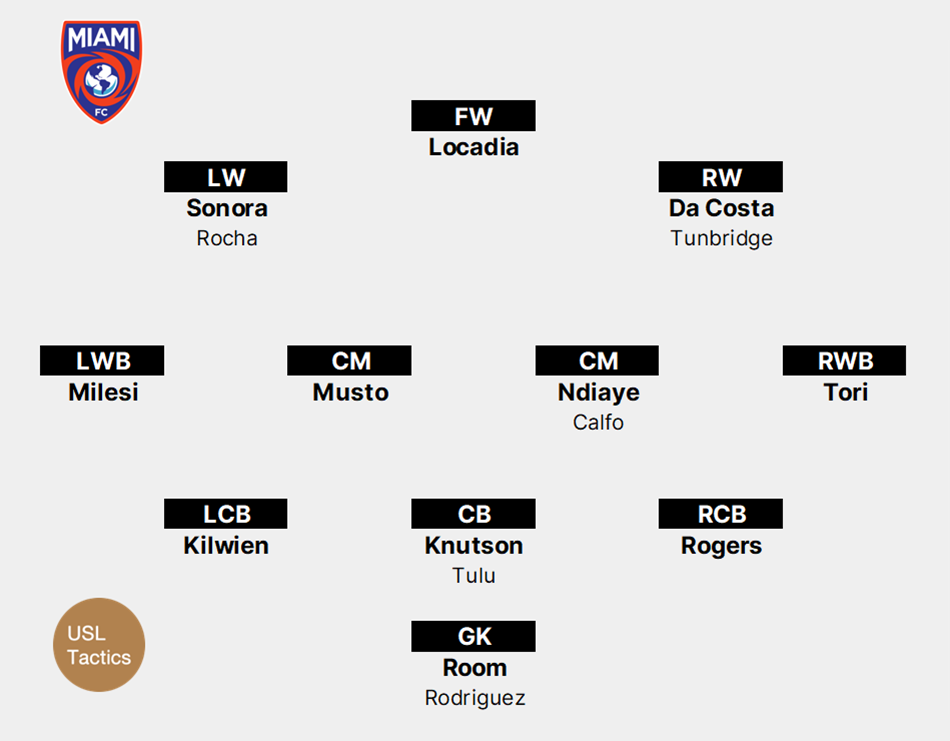
My bullishness on Miami's potential relies on the names in the defensive and attacking lines. At the back, Preston Kilwien and Arthur Rogers are longtime favorites of mine, and they could be ingenious fits if Maddoni keeps to a similar system in 2026.
Rogers led all center backs with 11.5 final-third entries per 90 last year, building on an unmatched track record of initiation that began with Northern Colorado. Kilwien hasn’t been as singular a presence, but he has the potential to be the left-sided complement to Rogers. I've heard criticisms of Kilwien’s distribution under pressure, but I don't tend to agree. Last year with Texoma, he outperformed his expected completion rate by 1.2% and advanced play by 11 yards per pass.
Crucially, both players are also good defenders. Rogers won 57% of his ground duels and 64% of his aerial duels in a demanding Tulsa system. Kilwien was even better, winning 62% of his battles on the ground in an absolutely ramshackle Texoma side. Put the reliable Daltyn Knutson between them, and you've got a legit trio – or, at a bare minimum, one that has real vision behind it.
Now, is there too heavy a concentration of third-tier talent in Miami's spine? It's an argument I'm willing to hear out. I think Kilwien is ready for the jump back to the Championship, and I think Bachir Ndiaye and Tommy Musto are ready to do the same in the pivot. That's not a guarantee.
Still, the idea of Miami building out with a "3+1" resting base with Musto – just signed from LAFC II – as a low-seated creator and Ndiaye wrecking shop further ahead is a fun one. Musto is especially enticing. He boasted a 13% touch share in Los Angeles, exceeding his expected completion rate by 4% on that high volume. If he can pull the strings alongside those channel-based center backs, it'll be a boon for Maddoni.
Further ahead, Miami has the talent to pay off that (hypothetical) line-breaking service. We know Rodrigo Da Costa can get close to 10 goal contributions, even at age 32. Mason Tunbridge, who put up 0.63 xG+xA per 90 and 1.6 dribbles per game in League One, will be hot in pursuit of starting minutes behind him. If Miami really competes, though, it’ll owe to imports like Joel Sonora.
You see Sonora, a 29-year-old Dallas native, at work in the reel above. The attacking midfielder brings years of experience in the top two tiers in Argentina, doing things like you’re seeing: receiving in the pockets, beating defenders on the dribble, and acting like a setup man into and through zone 14.
If things go right, Sonora will be afforded extra space to work because of Jurgen Locadia’s presence at striker. While the 32-year-old has spent his last few seasons in China, Iran, and the Spanish lower leagues, he’ll play at the upcoming World Cup for Curaçao and made a Premier League appearance for Brighton as recently as the 2021-2022 season. A well-built 6’1”, Locadia has the presence to shoulder off defenders and has good one-on-one burst; expect more than a few tight-space cutbacks where Locadia finds his left foot to score.
Locadia isn’t a sure thing at this point in his career, and his post-Brighton run with FC Cincinnati was middling. Likewise, Sonora has only played 1,100 total minutes in his last three seasons. At every level, you can raise legitimate complaints about the reliability of the Miami roster.
Nevertheless, it’s the time of year to be hopeful. You can look at Miami and come up with the scenario where they coalesce and compete, far more so than in 2025. The range of outcomes for this club is vast – I’d be unsurprised at anything from a fifth to 13th place finish in the East – but there might be something cooking.
Signing Potpourri, 7th Edition
For all their wobbles this winter, the Birmingham Legion still have a roster that’s worth a second look. Jay Heaps was always a 4-2-3-1 or 4-1-4-1 coach in New England, and that formational framework – a likely option for the Legion with Heaps back on the sideline – is a better fit for this roster than Mark Briggs’ preferred back three. Adding former St. Louis standout Seth Antwi to the midfield only bolsters that fact.
In more than 4,000 minutes in MLS Next Pro, the 26-year-old made 1.8 interceptions per game, won a strong 53% of his ground duels, and completed 90% of his passes. Antwi typically played a No. 6 role but knew when to step up in possession, providing a safety net to help St. Louis reset. For a Legion team that never nailed down a consistent holding mid in 2025, Antwi is a major upgrade.
You see that here, where Antwi (in red) sits low in the midfield while one of St. Louis’ defenders overextends as a carrier. At every step, Antwi knows how to read the game; initially, he drops to fill space and mark a forward, yelling and pointing for a teammate to cover his back side. Once that coverage arrives, Antwi steps to the opposing dribbler and dislodges the ball. The fight never abates until St. Louis is back in possession and set up for a break.
In every sense, this is what Birmingham needs. We know this team has vertical upside on the wings, but they’ve lacked a solidifying presence through the middle. Seth Antwi can be that player.
Down in League One, I continue to be utterly impressed with Boise’s business, but I’ve had one big question: who’s the ball mover in this midfield?
In theory, it’s Charlie Adams. We saw the Englishman do that job for Nate Miller in San Diego, roving as a left-of-center distribution machine in the Loyal midfield. Back in 2023, Adams completed nearly seven final-third entries per 90 – but, on the contrary, he’s about to turn 32 and has played less than 800 minutes a year since then.
Maybe the answer is that there isn’t a quarterback in the midfield, in which case ex-Detroit product Dominic Gasso, signed last week, has a clear role to play.
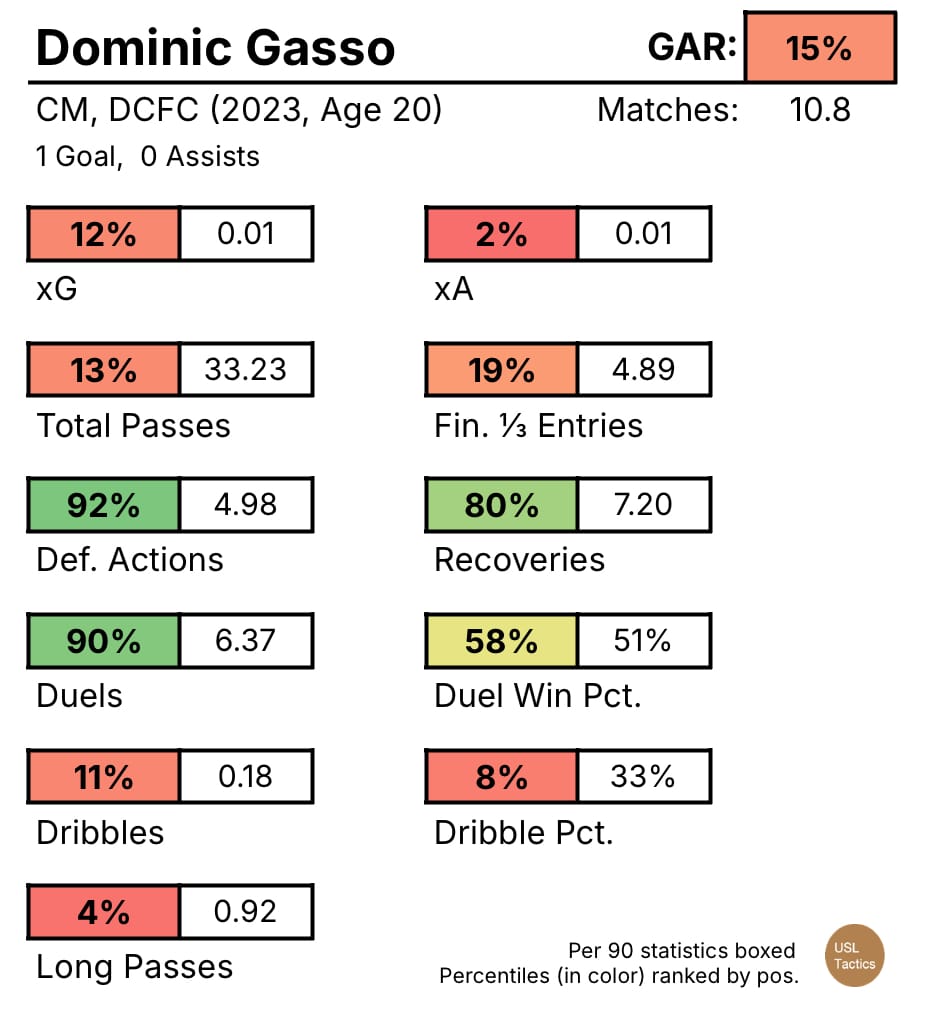
Gasso seemed to break out as a 20-year-old in the 2023 season, providing high-volume destruction and one-on-one stability in the pivot of what was usually a 3-4-3. Much like Adams, Gasso hasn’t played much soccer since then – though he benefits from being a decade younger. Miller clearly sees something there, and I’m inclined to agree; Gasso showed too much upside at the Championship level to handwave away.
Boise could pair Gasso with the shuttling Phillip Mayaka in their pivot, trusting defenders like Jake Crull or Jonathan Ricketts to carry water as line-breaking distributors. Moreover, it’s likely that Boise looks more vertical than San Diego did, in which case an all-recovery pivot is even more logical.
Time will tell, but I’m watching that position group with fascination, and Dominic Gasso potentially has a key role to play.
In other news…
You may've missed Lexington signing Gracie Falla – a two-time SEC Defender of the Year – this past week, but it's a neat encapsulation of how they're playing chess while everyone else is playing checkers. Falla will finish her final season at South Carolina before arriving in the Super League on a multi-year contract next summer, and bringing 95th percentile passing from the left and a 68% defensive duel win percentage along with her. Still, it's that ambition and contract structure that stands out: LSC continues to push the envelope, building for the future like no one else in the USL on the men's and women's sides alike.
Similar kudos for DC Power, who had a bye weekend but used the winter break to extend star striker Gianna Gourley (eight goals, 0.47 xG per 90) on a multi-year basis. Center back Claire Constant, wingback Susanna Fitch, and center mid Emily Colton all inked similar deals. That sort of long-term roster building feels like a sign of stability for the Super League writ large.
I’ve maxed out on Fort Wayne between last week’s newsletter and the scouting piece on Backheeled, but signing a defender of James Musa’s quality is *crazy* work. While the New Zealand international is about to turn 34, he played more than 2,600 minutes for Indy last year and didn’t miss a beat in a physically demanding role. Fort Wayne will require Musa – who only attempted 33 passes per game last year – to be more patient, but he’s technical enough to do that job while providing elite defensive quality in a League One context.
I’ve settled into a state of reserved skepticism going into any Marvel project, but Wonder Man is unabashedly good. It’s part Hollywood satire and part buddy comedy, but it really comes together because Ben Kingsley and Yahya Abdul-Mateen II have miraculous emotional chemistry with each other. Between the consistent laughs, the lead performances, and a healthy dose of Midnight Cowboy references, it’s a satisfying character study that never descends into “superhero origin” tropes.